
Faculty Advisory Board
Meet Your AI@Mines Faculty Advisory Board
Artificial intelligence is transforming how we teach, learn, conduct research and solve complex challenges. The Mines AI Faculty Advisory Board brings together experts from engineering, computer science, humanities and applied research to help guide the responsible and effective integration of AI across the university. From machine learning and robotics to AI ethics, education and scientific discovery, these faculty leaders provide expertise, training and thought leadership that empower the Mines community to navigate an AI-enabled future with confidence.
Xiaoli Zhang, Professor, Mechanical Engineering
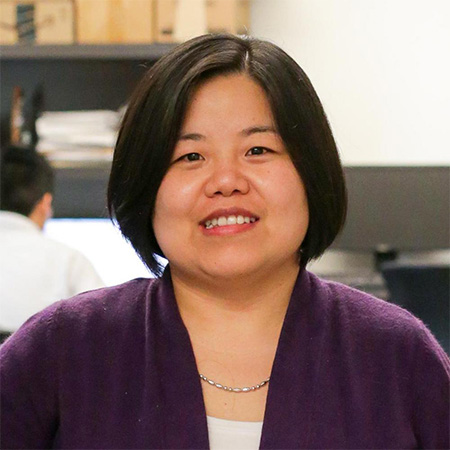 Xiaoli Zhang is a Professor, Director of the Robotics Graduate Program and runs the Intelligent Robotics and Systems Laboratory at Colorado School of Mines. She has over 20 years of experience in AI, robotics and intelligent engineering systems. She is passionate about helping engineers use AI effectively for analysis, automation, sensing, decision-making and physical systems. Her expertise includes applied AI for robotics and automation, intelligent sensing and perception, autonomous systems, AI-enabled inspection and monitoring and AI applications in manufacturing, energy and infrastructure. She welcomes consultations and trainings on teaching applied AI for engineering, responsible AI deployment and integrating AI-enabled analysis into engineering.
Areas of Expertise:
- Applied AI for Engineering Analysis
- Robotics
- Intelligent Sensing and Control
- Human-AI Collaboration
Sample Trainings:
- AI Beyond Chatbots: AI Capabilities for Engineering Analysis
- Low-Code AI Tools for Engineering Courses
Contact:
Heather Fester, Teaching Associate Professor, Humanities, Arts & Social Sciences
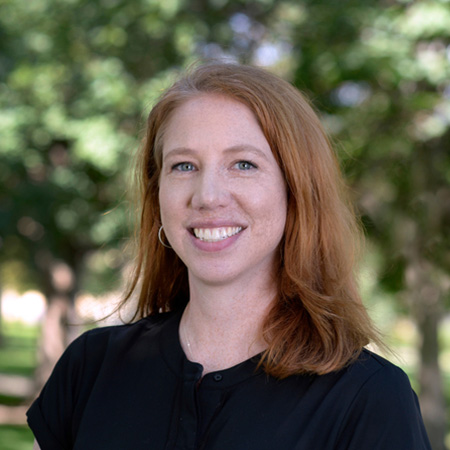 Heather Fester directs the Nature and Human Values (NHV) Program at Mines and is in her fifth year as a Teaching Associate Professor in the Humanities, Arts and Social Sciences Department. Heather brings a background in rhetoric and composition, pedagogy, critical digital literacy, ethics instruction, consciousness studies and executive coaching to this position. She has been involved in AI initiatives at Mines since summer 2023, including assisting with drafting the initial AI guidance and helping refine the recent AI@Mines literacy framework, guidance and syllabus statements as part of the Generative AI Guidance and Adoption Task Force. She also serves as an Engineering Learning Mentor through the Trefny Center and, in that role, is leading a Humanities and AI integration academic change project. In fall 2026, Heather is piloting an AI literacy-themed section of NHV that draws from the new Mines framework and focuses on helping students recognize the role of thinking in their education.
Areas of Expertise:
- Writing and AI
- AI Pedagogy
- AI Ethics
Sample Trainings:
- What is AI Literacy? A Humanities Perspective
- You Can't Automate Ethics: Ethical Stewardship and the Problem with Outsourcing Thinking
- From Surveillance to Trust: Moving Past AI Classroom Surveillance to More Generative Conversations with Your Students
Contact:
Pejman Tahmasebi, Associate Professor, Petroleum Engineering
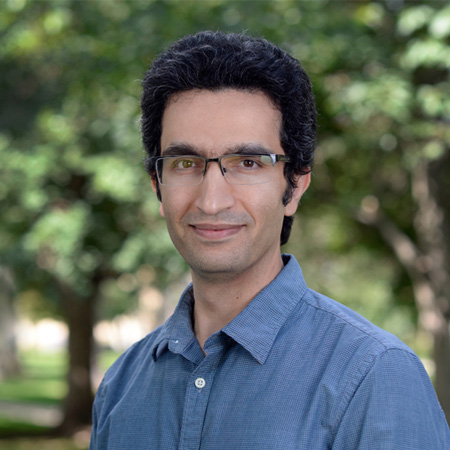 Dr. Pejman Tahmasebi is an Associate Professor at the Colorado School of Mines. He has over 20 years of experience working in the field of artificial intelligence, having integrated AI to solve problems related to energy, natural hazards and multiphysics simulations across fields. He has also worked with companies in the energy industry to identify AI applications for time-demanding problems.
For his PhD, he worked on the modeling of large- and small-scale porous media using data analytics methods in a joint program under the supervision of Prof. Sahimi at the University of Southern California. He then joined Stanford University as a postdoctoral researcher and worked on statistical modeling for data integration and uncertainty modeling. He later served as an associate research scientist at the University of Texas at Austin, where he helped develop novel statistical and multiscale techniques. He also conducted research at Caltech on granular particles for geomechanical applications in the Department of Mechanical and Civil Engineering. Dr. Tahmasebi has published several papers and five book chapters.
Areas of Expertise:
- Scientific AI and Machine Learning
- AI for Self-Guided Learning
- Responsible AI for Teaching and Research
Sample Trainings:
- Incorporating Agents for Scientific Problems
- Physics-Informed AI
Contact:
Bo Wu, Associate Professor, Computer Science
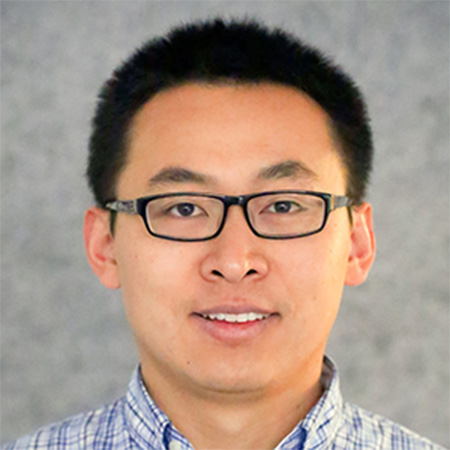 Bo Wu is an Associate Professor of Computer Science with expertise in artificial intelligence, machine learning, large language models, scalable systems and education research. He provides campus consultations and training on generative AI fundamentals, the effective use of AI in teaching and learning, AI workflow design and the use of AI in research. Drawing on his experience developing and deploying real-world AI products at multiple universities and companies, he helps faculty and students understand recent advances in AI, practical applications and real-world impacts.
Areas of Expertise:
- Generative AI Fundamentals
- AI Agents in Teaching and Research
Sample Trainings:
- How Large Language Models Work
- An Introduction to AI Agents in Teaching and Research
Contact:

Media Information
Learn how Colorado School of Mines is navigating the use of AI in education with this media tip sheet for journalists, educators and industry partners.