Article content
Preparing the next generation of engineers and scientists requires more than keeping pace with technological change — it requires actively equipping students to lead, innovate and solve complex problems in a world increasingly shaped by artificial intelligence.
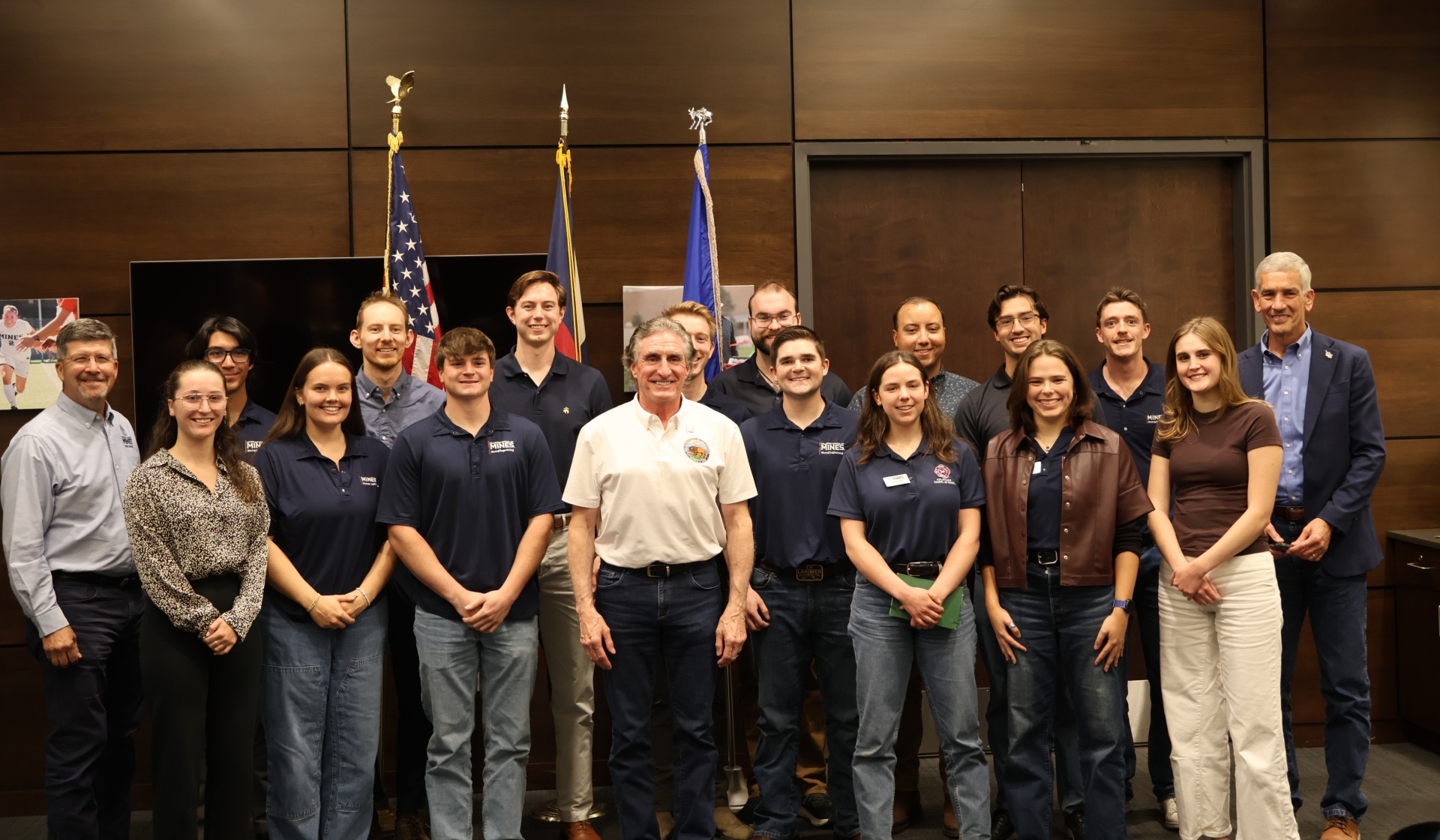
To ensure this effort remains deeply aligned with student needs, concerns and aspirations, AI@Mines has launched the AI@Mines Student Advisory Team. Serving as a key consultative and creative body, this team will elevate student perspectives, drive peer engagement, and directly inform Mines’ campus-wide AI engagement and literacy initiatives.
The Student Advisory Team will collaborate directly with AI@Mines Leadership, the AI@Mines Faculty Advisory Board and AI@Mines Faculty Champions to ensure Mines continues to empower students to thrive in an AI-enabled future. The Student Advisory Team is chaired by Colin Terry, assistant vice president of student life.
Meet the AI@Mines Student Advisory Team
Lara Ferreira Bezerra
First-year PhD student in Advanced Energy Systems
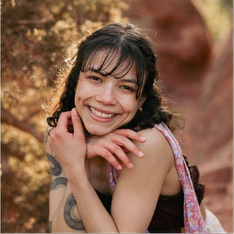 "My name is Lara, I am an international student from Brazil and got my BA in Applied Mathematics and Statistics from Mines in 2025, during which I learned how to create LLMs from scratch and discussed the ethics behind it at length. I also interned at NLR for three years, where I was dealing with AI and ML technologies for modeling behaviors in the broad energy system. I believe LLMs are an amazing tool for many tasks that don't necessarily involve human emotion, something like a hat to help protect us from the sun, but people should be able to survive without it."
Ronald Chu
Master's student in computer science; graduated from Mines in 2026 with B.S. in Quantitative Biosciences and Engineering
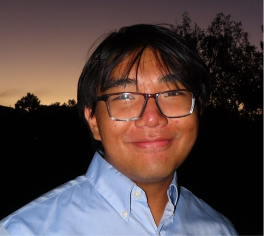 "AI now runs inside much of the infrastructure we depend on, whether we like it or not. Because of this, I dedicated myself to understanding it and its broader impacts through multiple hackathons, work in numerous domains, and as the former Artificial Intelligence and Machine Learning Club President. From all these experiences, I see that AI's importance has developed quickly, for better and worse.
As a student, and soon a professional, a worry that I have is that it should not get in the way of critical thinking and should be more moderated. For example, learning will be different for everybody, and I think AI could help people solve problems quicker, but not always better; there will be less to take from the AI if the student doesn't engage with the AI's thinking.
What concerns me most is how quickly models are being pushed out, because of what that does to learning, to the world, and to how we treat each other. I’m not against AI; there’s real value in it. But I wish we’d start with the outputs that affect people most, and eventually move to the whole system."
Thea Elrod
Junior majoring in quantitative biosciences and engineering
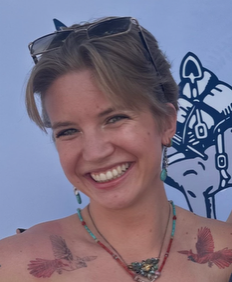 "My biggest passion is being a creative. I’m an artist featured in the Mines art journal High Grade, and I write music. As a new undergraduate researcher, I’m finding that creativity can blend through different platforms and mediums, whether the practice is in the lab or a sketchbook. There’s a common fear among students of AI stripping away human creativity, but as an artist and researcher, I’ve found that, used right, AI can enhance it instead. Tinkering with AI and learning about its function has become another playground for my creativity. I like using the projects feature in AI models to create a personalized AI around a chosen topic—like a tutor or research advisor working off specific papers and my own ideas. I hope AI can integrate into education as an extension of an idea rather than a cognitive or creative offload. Since it’s a fast-evolving reality that’s hard to keep up with, I hope students can tinker with it and develop their own healthy ways of learning without shame. I believe that as future engineers, shaping our own paths through guidance and exploration with AI can help us feel confident in our work and our creative flow."
Geneviève Morrison
Senior majoring in environmental engineering
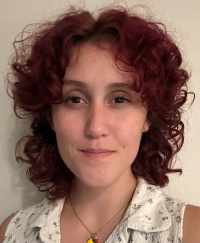 "I am committed to not using generative AI; the environmental impact makes it unjustifiable. From my perspective, any of the benefits I could gain from using genAI are outweighed by the negative impact of data centers on water security, noise pollution, and air pollution. I support the use of AI for advanced research purposes such as remote sensing and modelling complex systems because I feel that these applications will advance society, bring meaningful benefits to people, in addition to using less energy and water than genAI. I value an education free from AI; I feel that using AI in the classroom sidelines critical thinking and the human connections shared between educators and students. I look forward to serving the Mines community and collaboratively working to ensure my peers get the most out of our time at Mines. "
Prince Owusu-Ansah
Senior majoring in mechanical engineering
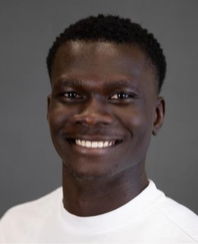 "I am a Mechanical Engineering student at Colorado School of Mines, graduating in Spring 2027. I am originally from Kumasi, Ghana, and grew up in Aurora, Colorado. Throughout my time at Mines, I have developed a strong interest in engineering, innovation, and how emerging technologies can shape the future of industry.
I have been actively involved in student leadership through Undergraduate Student Government, where I have served in multiple roles and currently serve as Director of Academic Affairs. Through USG, I have had the opportunity to work with students, faculty, and administrators on issues related to academics, student experiences, and the future of education. I am also involved in Senior Traditions & Networking and other campus initiatives focused on building community and creating opportunities for students.
I am strongly AI-positive and see artificial intelligence as an important step forward in technological and industrial progress. I believe AI has the potential to improve efficiency, encourage innovation, and help engineers solve increasingly complex problems. At the same time, I believe responsible implementation, academic integrity, and thoughtful conversations about AI are important. As a member of the AI@Mines Student Advisory Team, I hope to bring a student perspective to these conversations and help Mines prepare students to use AI effectively, responsibly, and confidently in their future careers."
Lydia Tan
Senior majoring in electrical engineering (Integrated Circuits and Electronics major, Computer Engineering minor)
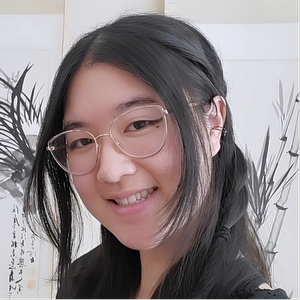 "I’m Lydia Tan, an electrical engineering student at the Colorado School of Mines interested in semiconductor devices, electromagnetics, photonics, and emerging computing technologies. Much of my work has involved taking complex physical ideas and turning them into models, experiments, or hardware that can actually be tested.
I think our conversations about AI often become unnecessarily black and white: either we should embrace it completely or restrict it because it changes how we learn and work. I’m more interested in the grey area between those extremes. Calculators once raised similar questions in education, but we eventually learned to integrate them without abandoning the need to understand mathematics. I think AI requires a similar transition.
Used poorly, AI can replace the thinking that education is supposed to develop. Used intentionally, however, it can improve efficiency, make knowledge more accessible, and give people more time to focus on deeper problems. I don’t think the goal should be to have AI think for us, but to determine where it can extend what we are capable of thinking, designing, and creating ourselves."
Rachael King
Sophomore majoring in geological engineering
 "My name is Rachael King, and I am a sophomore studying Geological Engineering with a focus in Environmental Geoscience, graduating in May 2029. My interest in artificial intelligence grew during my time as a student consultant on the Generative AI Adoption and Guideline Taskforce at Mines. I view AI as a powerful problem-solving tool that, when thoughtfully integrated, can aid student learning and help solve data-heavy challenges, such as optimizing freshwater usage in sustainable energy. At Mines, I embrace challenges both academically and personally. I am a dedicated cyclist, racing for World Bicycle Relief Michigan and Mines Cycling. Whether I am competing in a short-track mountain bike race or racing across Michigan, I love the endurance and adaptability of cycling demands. I also am a part of: Undergraduate Student Government, Future Energy Scholars, Undergraduate Research, Catholic Ministry, and Mines Foundation Dignitaries. When I am not doing any of that, you can find me skiing, spending time with friends and family, drinking coffee, and adventuring. I am thrilled to bring this student-focused perspective and drive to the AI Advisory position."
Christian Luna
Sophomore majoring in mechanical engineering (focus on nuclear energy)
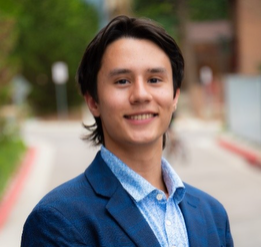 "When we discuss AI, we first must decide what role it should play and where its use should end. We praise AI for helping us finish work quickly yet criticize it when it seems to do the work in our place. That distinction sounds clear until students are asked to complete assignments they do not care about or see as relevant to what they hope to learn. In those moments, an unspoken rule can emerge, use AI when the work feels too time consuming or unimportant, but keep that use hidden because others may disapprove. The issue then becomes not only whether AI was used, but whether its use can be concealed from those who might judge it. If that is how students navigate AI, we need to ask not only what AI can do, but why this gap of secrecy exists in the first place and how to cultivate a more unified understanding and clear consciousness behind it."
*****
Representing diverse academic pursuits, professional and industry aspirations, and perspectives on AI, this team ensures student voices guide campus strategy. By examining both the benefits and potential pitfalls of artificial intelligence, members will help shape the skills, tools, and experiences Mines students need to thrive in a world impacted by AI technologies.

About Mines
Colorado School of Mines is a public R1 research university focused on applied science and engineering, producing the talent, knowledge and innovations to serve industry and benefit society – all to create a more prosperous future.