Article content
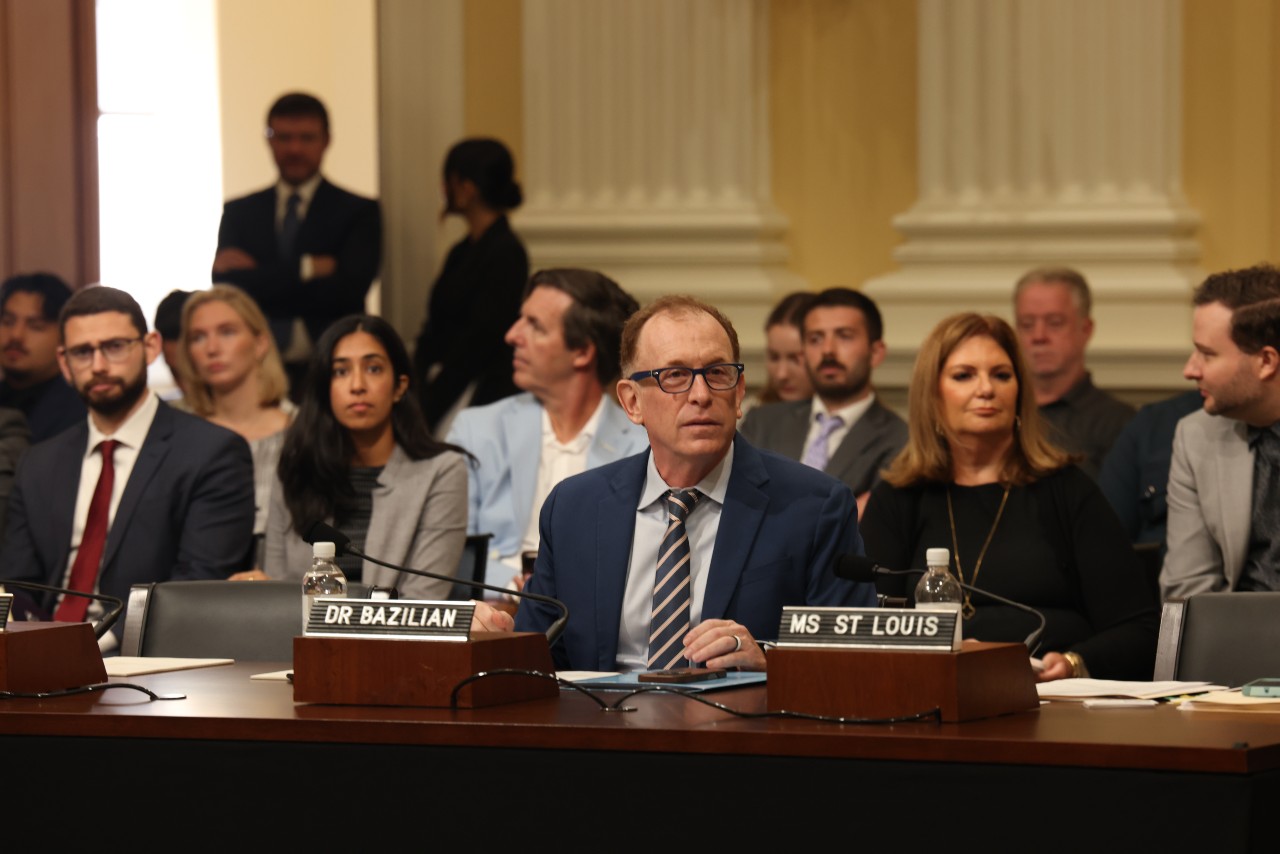
On Wednesday, Morgan Bazilian, professor and director of the Payne Institute for Public Policy at Colorado School of Mines, presented expert testimony to the House Ways & Means Committee. The hearing, titled “Strategic Partnerships to Secure Critical Resources and Supply Chains,” examined global critical mineral markets dominated by China and the trade, finance and diplomatic policy levers needed to build resilient supply networks.
Bazilian, who previously served as a lead energy specialist at the World Bank, is currently a member of the Council on Foreign Relations, a senior fellow at the Atlantic Council and an energy security advisor to the National Laboratory of the Rockies.
In his testimony, Bazilian cautioned that securing access to raw ore alone will not solve U.S. vulnerabilities.
“Access to ore is necessary but not sufficient to bring security and resilience to full supply chains. Material still has to be processed and refined, and China's dominance runs deepest at those later steps,” Bazilian testified. “A trade agreement or financing vehicle should move beyond solely unlocking ore and consider the full value chain through advanced manufacturing and demand signals.”
Advocating for a "mine to mission" approach to supply chain security, Bazilian urged the Committee to measure resilience by whether inputs can clear every processing, refining, and technical qualification step fast enough to support economic and security needs during a crisis.
“The mine to mission framing allows for an assessment of a wider set of risks including markets, geopolitics, illicit trade, and military preparedness,” Bazilian noted. “Across the value chain, processing and pilot scale capability, technical qualification, geological data, and the workforce to run all of it are more often the binding constraint than ore itself.”
To close these gaps, Bazilian encouraged the committee to modernize U.S. diplomatic and legislative strategy by strengthening trade partnerships across resource-rich regions, including Central Asia, Africa and South America, exercise statutory oversight and align industrial readiness with national security needs. He also emphasized that a strong domestic mining and processing sector, coupled with world-class advanced manufacturing, will positively underpin international partnerships.
Bazilian’s testimony highlights Mines' position as a premier global institution for critical minerals research, economics, and policy. Home to the nation's only graduate program in Mineral and Energy Economics and the Payne Institute for Public Policy, Mines leverages cross-disciplinary technical expertise—spanning exploration and extractive metallurgy to processing, and advanced manufacturing—to guide federal policymakers and industry leaders through complex global supply networks.
Through initiatives led by the Payne Institute and collaborations with key federal agencies, including the Department of War, the Department of Energy, the U.S. Geological Survey and industry across the supply chain, Mines continues to shape critical minerals strategy, train the technical workforce and advance technical innovations to secure critical minerals from mine to market.
/filters:format(webp)/prod01/mines/media/minesedu/admin-media/placeholder-images/Guggenheim.png)
About Mines
Colorado School of Mines is a public R1 research university focused on applied science and engineering, producing the talent, knowledge and innovations to serve industry and benefit society – all to create a more prosperous future.

.jpg)