
Article content
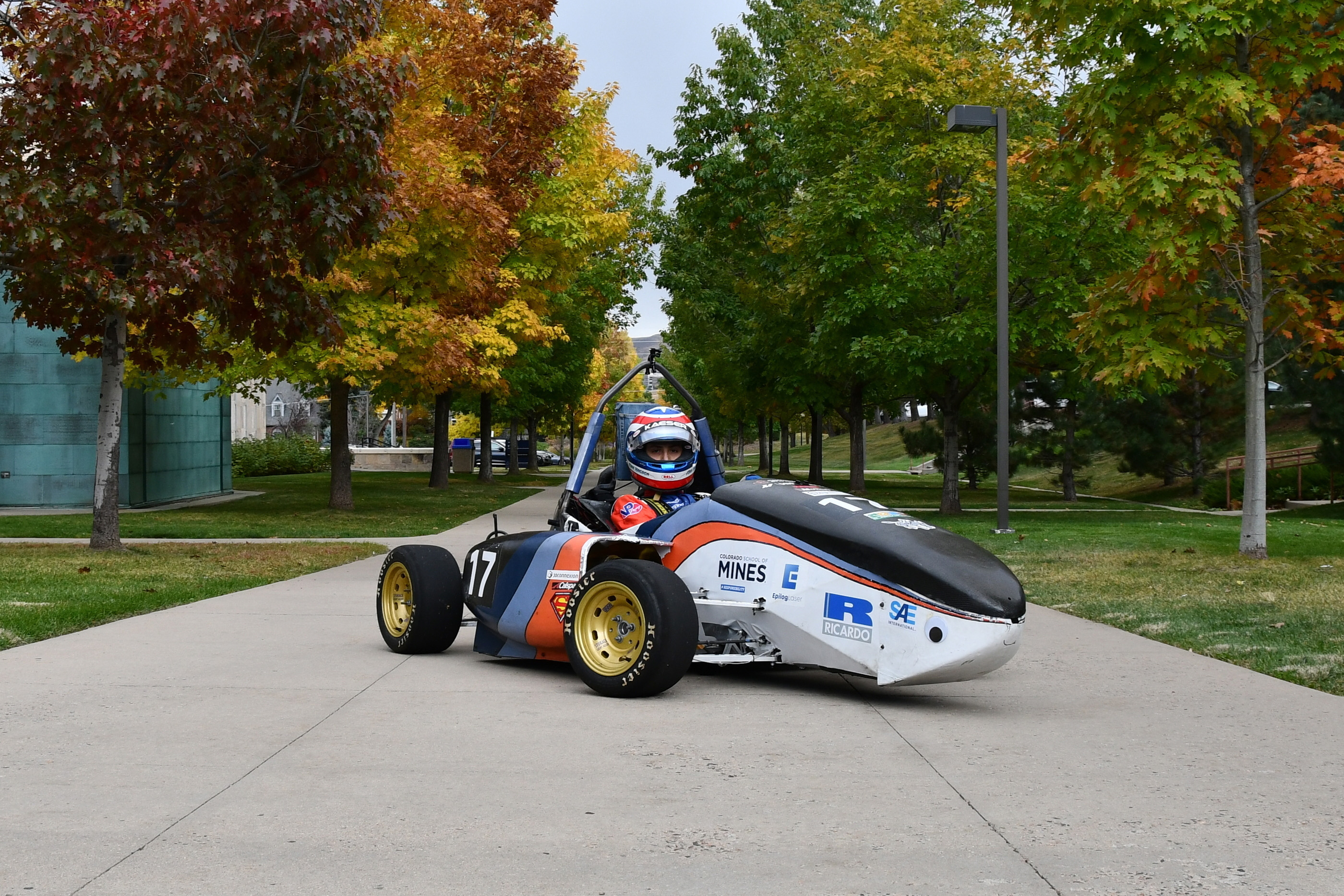
As a first-year student, Brennan Koontz ’26 joined Mines Formula SAE mostly to explore. He didn’t consider himself a “huge car guy,” he said, but he saw the team—which designs, builds and races small formula-style cars—as a chance to get some hands-on experience and sample the different engineering disciplines before deciding which one he wanted to pursue.
As time went on, though, Koontz found himself becoming increasingly involved with the team, working on the control arms, spindles, uprights, springs, dampers and other parts of the vehicle’s suspension system. By his senior year, Koontz was the lead engineer—the top technical leadership role—and spent virtually all of his free time working on the team’s racecar in one of the bays at the Aramco xWorks Innovation Space on campus.
His investment paid off in 2026, when Koontz helped lead Mines to its best overall finish in program history at the Formula SAE Michigan Internal Combustion Competition, earning 14th place out of 117 teams. Koontz’s experience with Formula SAE also helped pave the way for his next step: a job at Tesla, where he now works on the chassis team.
“For me, personally, it is the defining characteristic of my college experience,” he said. “When I think about my college experience at Mines, that’s what I think about.”
That’s a common refrain among Mines graduates. Though classes, internships and research are all important, many find competition teams to be among the most meaningful and valuable parts of their time at the university.
Mines has roughly 40 engineering and design student competition teams, plus numerous other opportunities for students to tackle challenges together. They give students a chance to put their technical knowledge to the test as they tackle complex engineering challenges—all while navigating the deadlines, budgets, setbacks and high-pressure moments that mirror the realities of the engineering profession.
Student competition teams do more than sharpen students’ technical skills. Working across disciplines and learning to solve problems, students also gain exposure to the kinds of challenges and responsibilities they’ll encounter in the workplace.
“Participating in these events and competition teams can be really transformative for students,” said Victoria Bill, director of the Labriola Innovation Hub, which serves as a home for numerous student competition teams on campus. “It helps prepare them for industry and for their future experiences, building not just the technical skills we expect our engineers to have, but also the professional skills they really need to have in today’s world—things like teamwork, project management, communication and business skills.”
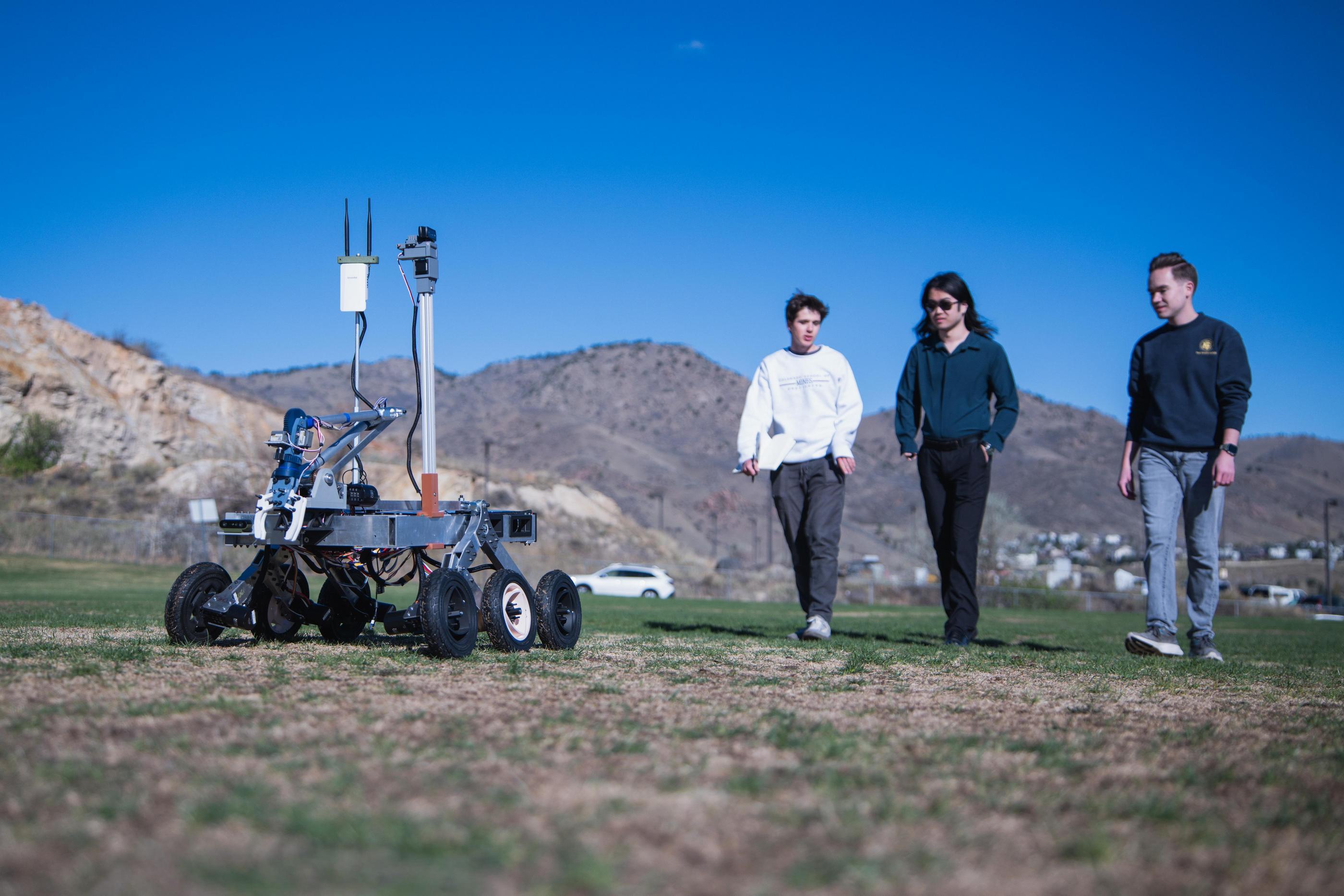 A Mines student team participated in The Mars Society’s University Rover Challenge, building a rover intended to navigate the Martian landscape. The team assembled the rover’s components, including soil science, electrical and mechanical subsystems, and tested the rover's terrain navigation out on the intramural fields on campus.
Collaboration in action
When undergraduates arrive on campus, they’re introduced to the wide range of student competition teams at Mines and can explore the ones that best align with their interests, from robotics and aerospace to mining and materials.
No matter which team they choose to join, students are likely to find a warm, welcoming community of peers who are eager to collaborate and share knowledge.
“I remember being a sophomore and having a senior teaching me things about solid mechanics or machine design,” said Koontz. “The amount of teaching and mentoring that happens is one of the most special things. [Student competition teams] are really intended to be a place where you can grow.”
The peer-to-peer learning he experienced as an underclassman also gave Koontz a head start on concepts he wouldn’t encounter in the classroom until later in his college career. When those subjects eventually did come up in his junior- and senior-level coursework, they were more familiar—and easier to grasp—because he had already seen them in action.
Beyond building technical expertise, competition teams also help students learn how to collaborate effectively. Unlike individual assignments or small-group class projects, competition teams often require students to coordinate with much larger groups—10, 20 or even 80 people, who are all working toward the same goal. They have to communicate, divide responsibilities, navigate different personalities and figure out how to move a project forward together.
“People think that engineering is a purely technical field, but the reality is that a large portion of the job is actually just working with people. And working with people is arguably one of the more difficult aspects of the job—people you like, people you don’t like, people you just don’t understand,” said Koontz. “Participating in a competition team—where you’re doing something you definitely can’t do alone and you need to rely on other people—it teaches you a lot.”
For current student Waylon Weeks, the value of collaboration became especially clear as his team raced to meet the deadline for the Rock and Roll with NASA Challenge, which tasked participants with creating wheels for lunar rovers. As co-captain of the Mines team, Weeks helped develop a 3D-printed option made from space-grade polycarbonate.
The team had to print each wheel in four parts and fit them together using a dovetail sliding mechanism—a process that proved more difficult in practice than it looked on paper. After struggling on his own to assemble the pieces without cracking the material, Weeks turned to his teammates, who quickly came up with a workaround he hadn’t considered.
Although the Mines team didn’t ultimately advance to the final phase of the challenge, the experience still left a lasting impression on Weeks.
“When you’ve been working on something for a couple hours and you can’t figure it out, it gets frustrating,” he said. “But then someone comes in and sees it with fresh eyes and can find a simple solution—it doesn’t have to be super complicated. I definitely valued that a lot.”
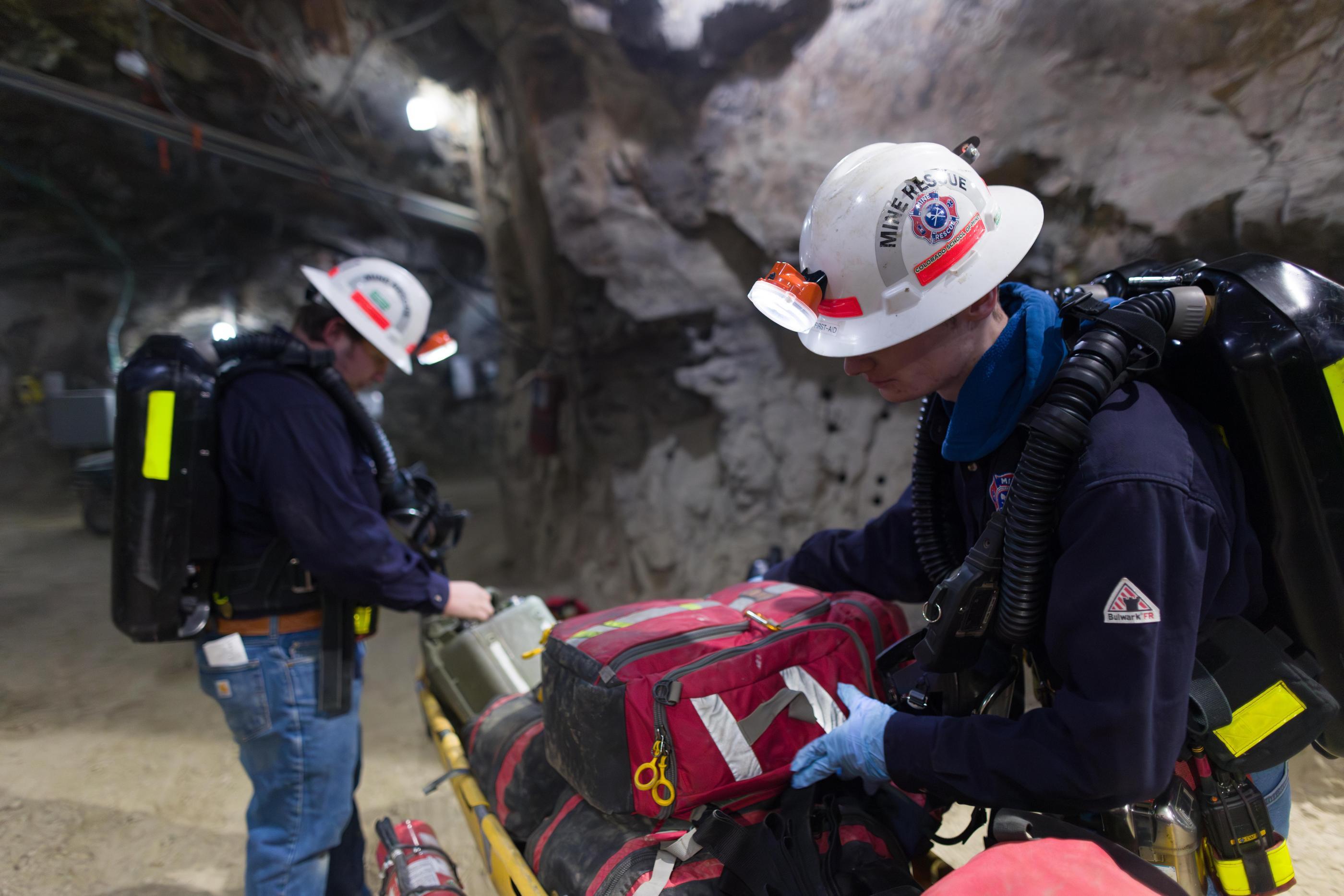 Mines’ Mine Rescue Team competes across the world in challenges related to mine safety and emergency response. The team trains weekly in the Edgar Experimental Mine and other campus facilities, gaining hands-on experience and skills they can apply in their professional lives.
From campus to career
The collaborative environment extends beyond the students themselves, bringing professors, alumni, industry professionals and other experts into the mix.
Many competition teams work closely with faculty advisors, who provide technical guidance, help students navigate challenges and offer another source of mentorship outside the classroom.
The teams are also often supported by professional organizations and government agencies, giving students opportunities to connect with the broader engineering community and build relationships that can last beyond graduation—and potentially lead to internships and jobs.
Professional development is a top priority for Ava Armbruster, a senior who serves as president of Mines Formula SAE. She’s made it a goal to bring four to six industry partners to campus each semester to speak with the team, review students’ resumes and answer questions about their work and career paths.
“We get a lot of feedback from companies that when people apply, if they see Mines Formula on their resume, they’re fast-tracked through the interview process,” she said. “We wanted to really take advantage of that. Let’s get team members to be the No. 1 hires of all the companies they’re going to, let’s get our internship rate up above 90 percent and let’s do all these cool things to benefit team members while they’re students.”
For some Mines graduates, the connection between competition teams and careers comes full circle: The experiences that helped prepare them for the working world are now among the qualifications they look for in prospective hires.
As a Mines student, Josh Rands ’20 regularly competed in innovation challenges and hackathons, in which participants work together under tight deadlines to develop solutions to a specific problem. Those experiences sharpened his creativity and problem-solving skills, nurturing an entrepreneurial mindset that ultimately led him to start his own company.
In 2022, Rands co-founded TerraCity, a startup developing an artificial intelligence-powered transportation analysis and modeling platform. Several years later, when it came time to expand TerraCity’s team, Rands hired Dorian Cauwe ’23, MS ’24 in large part because of the skills and experience Cauwe had gained through the Intermountain Collegiate Programming Contest (ICPC) and the Battery Workforce Challenge at Mines.
“The people who are doing these competitions are motivated, passionate people, and those are all traits that point, to me, to someone who will succeed in a role,” said Rands. “I really do believe these kinds of projects and team-based work and the pressure of the competition does a great job of simulating what you’ll encounter in the real world. These environments are the best simulation of what your actual career is going to be like.”
/filters:format(webp)/prod01/mines/media/minesedu/admin-media/placeholder-images/Guggenheim.png)
About Mines
Colorado School of Mines is a public R1 research university focused on applied science and engineering, producing the talent, knowledge and innovations to serve industry and benefit society – all to create a more prosperous future.