
Article content
Sandvik engineers help shape the future of mining, but many built their careers outside the mine itself. Although highly qualified in their respective fields, many have had little formal training in mining. However, there’s a new model that aims to bridge that gap.
A partnership between Sandvik and Mines ProEd, with Mines Professor Kadri Dagdelen serving as technical lead, the Sandvik International Mining School (SIMS) is a two-year global education program that takes Sandvik employees beyond their individual disciplines and into university classrooms and mine sites around the world.
“We’re not really miners—we’re equipment manufacturers,” said Allen Bellew, Sandvik’s global training manager. “It was very clear from a lot of the conversations we had with our customers that there was a gap in engineers’ understanding of the products and technologies that serve the mining industry.”
SIMS brings together employees from across Sandvik in a cohort-based learning experience that spans nine leading mining universities across six countries. They explore the entire mining value chain, from mining methods and engineering fundamentals to automation, sustainability, financial evaluation and emerging technologies. Mines was the natural place to start.
“Mines is the number one mining school globally, and to match that with Sandvik, which is the number one equipment supplier globally, is a very important match—and a good one,” Bellew said.
SIMS brings together employees from across Sandvik for a two-year, cohort-based journey through nine mining universities on five continents. Participants begin at Mines with two weeks of broad, postgraduate-level mining instruction before traveling to universities in South Africa, Chile, Austria, Sweden and Australia. They complete a series of modules that cover the full mining value chain, from engineering fundamentals to advanced topics such as automation, financial evaluation and sustainability. Each module also includes a mine visit, exposing participants to open-pit and underground operations, coal and gold mines and different mining methods.
“The SIMS program is very selective,” Dagdelen said. “The participants have to be highly qualified and motivated.”
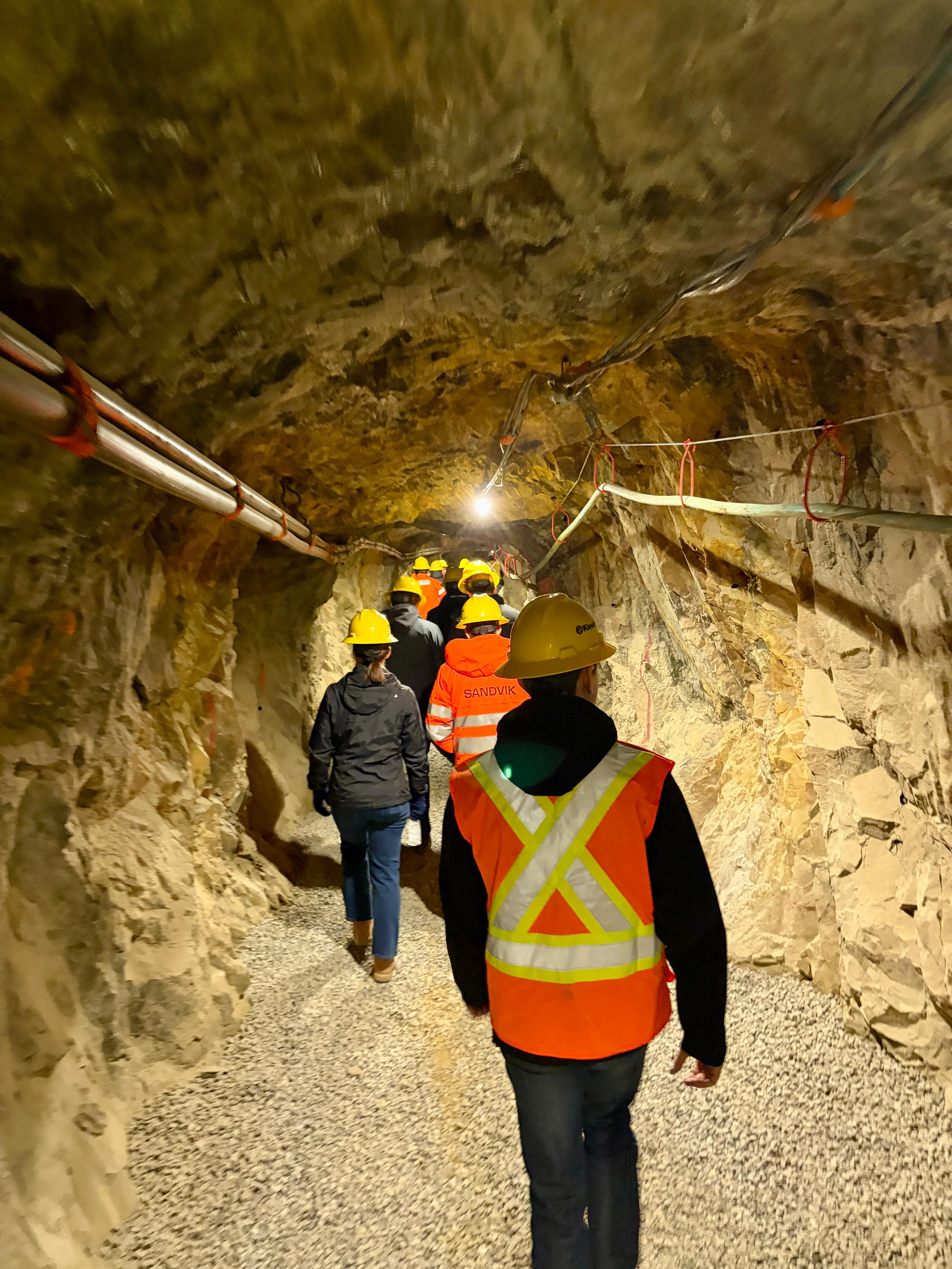
“A lot of these people sit in factories and offices, designing and creating solutions for customers, but they’ve never actually been underground,” Bellew said about the program’s participants.
Each module incorporates site visits that expose participants to a broad range of mining environments, including both underground and surface operations, different commodities and varying mining methods. For many participants, these experiences provide their first opportunity to observe mining operations firsthand and connect academic concepts with real-world practice. That practical experience changes how engineers understand both their products and their customers.
The global nature of the program matters, too. Participants come from 16 different countries and career stages, gaining exposure to mining practices and perspectives that vary around the world.
“What works in Chile isn’t always going to work in South Africa,” Bellew said. “So it helps to know more about different cultures, mine expectations and mining conditions of different countries.”
For Sandvik, the program represents a long-term investment in talent development. By building mining knowledge alongside technical expertise, the company aims to prepare employees for broader responsibilities, stronger customer engagement and greater contribution to the business. The program also supports collaboration across functions and regions, helping participants develop professional networks that extend throughout the global organization.
The partnership also creates significant value for Mines. Through close collaboration with Sandvik, faculty and program leaders maintain direct engagement with one of the mining industry’s leading technology providers. Industry representatives contribute insights on emerging technologies, operational challenges and the skills needed by the modern mining workforce, ensuring that learning remains closely connected to industry practice.
Sandvik and its university partners designed the curriculum together, aligning what the company needs with what the universities do best. Dagdelen also said the unique partnership with Sandvik has already opened up additional partnership opportunities with other mining companies that want to set up similar programs.
“We have different expertise, and collaboration matters,” Bellew said. “When you do a real partnership, you can align it with what both parties value and bring that together.”
And because Mines and Sandvik are building the program for the long term, they can continue learning from one another and refining it.
“Sandvik and Mines are really trying to get better, and we’ll see those outcomes over a long period, not in just one year,” Bellew said. “We’ve been working together nearly two years, with two or three more to go—imagine how good it’ll look in a few years.”
/filters:format(webp)/prod01/mines/media/minesedu/admin-media/placeholder-images/Guggenheim.png)
About Mines
Colorado School of Mines is a public R1 research university focused on applied science and engineering, producing the talent, knowledge and innovations to serve industry and benefit society – all to create a more prosperous future.