.jpg)
Article content
Colorado School of Mines researchers are part of a team selected for negotiation of an award by the U.S. Department of Energy to lead a Mine of the Future: Proving Ground Initiative project.
Mine of the Future is a national effort designed to accelerate the development, testing and deployment of advanced technologies for the U.S. mining industry. The selection was made through the Advanced Mining and Mineral Production Technologies Office, which is part of DOE’s Office of Critical Minerals and Energy Innovations.
Led by Innovative Wireless Technologies, Inc. (IWT) in partnership with academic, industrial and training institutions across the U.S., the project will establish a national proving-ground framework integrating underground and surface mining environments.
The proving ground will give mining operators, equipment manufacturers, researchers and technology developers a real-world setting in which to develop, demonstrate and validate next-generation technologies before broader deployment.
Work spans secure wireless connectivity, workforce communications and tracking, advanced equipment monitoring, semi-autonomous and autonomous vehicle technologies, and data-driven operational intelligence. Workforce development is a central component, including hands-on training, certification programs and collaborative research designed to prepare workers for increasingly connected, automated and data-driven mining operations.
Sihua Shao, assistant professor of electrical engineering, is the project’s principal investigator for Mines, with Atef Elsherbeni, professor of electrical engineering, serving as Mines co-PI.
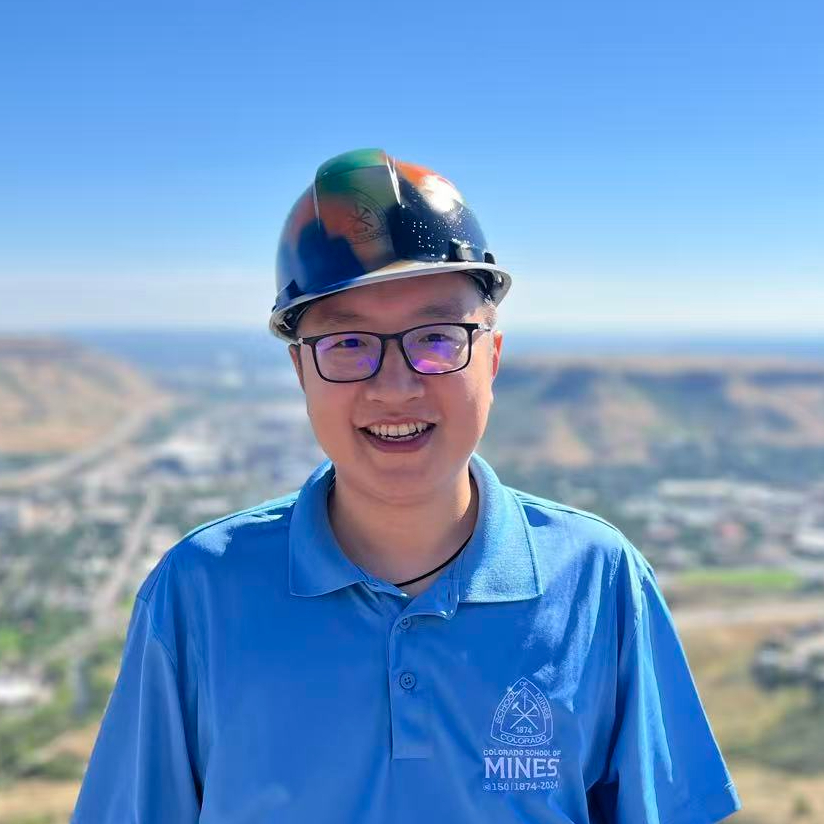 Sihua Shao
Shao will lead the Mines team's work at the Edgar Experimental Mine, a historic silver and gold mine in Idaho Springs, Colorado, that has been used by the university since the 1920s for hands-on mining education and research. There, the team will deploy and evaluate advanced wireless communication and tracking systems in a hard-rock underground environment, validate their integration with mine safety and rescue equipment, and operate Edgar as a proving ground for technology trials and hands-on training.
Sihua Shao
Shao will lead the Mines team's work at the Edgar Experimental Mine, a historic silver and gold mine in Idaho Springs, Colorado, that has been used by the university since the 1920s for hands-on mining education and research. There, the team will deploy and evaluate advanced wireless communication and tracking systems in a hard-rock underground environment, validate their integration with mine safety and rescue equipment, and operate Edgar as a proving ground for technology trials and hands-on training.
"Reliable communication underground is one of the hardest problems in mining, and one of the most consequential for miner safety," Shao said. “This project gives us the chance to test next-generation wireless and tracking systems under real hard-rock conditions at the Edgar Experimental Mine, and to put them in front of the students, miners and mine rescue teams who will eventually depend on them. That combination of research and hands-on training is what Edgar does best, and I'm looking forward to what our team can demonstrate there."
The four-year initiative is anticipated to represent a total project value of nearly $25 million, with approximately $17.7 million expected to come from federal funding and the balance from matching contributions by IWT and its project partners, pending award negotiations.
/filters:format(webp)/prod01/mines/media/minesedu/admin-media/placeholder-images/Guggenheim.png)
About Mines
Colorado School of Mines is a public R1 research university focused on applied science and engineering, producing the talent, knowledge and innovations to serve industry and benefit society – all to create a more prosperous future.
.jpg)