Article content
A new industry-academic research partnership at Colorado School of Mines aims to build and field-test new analytical tools that industry needs to drill deeper, hotter and more demanding wells for oil and gas, geothermal energy, carbon storage, hydrogen and more.
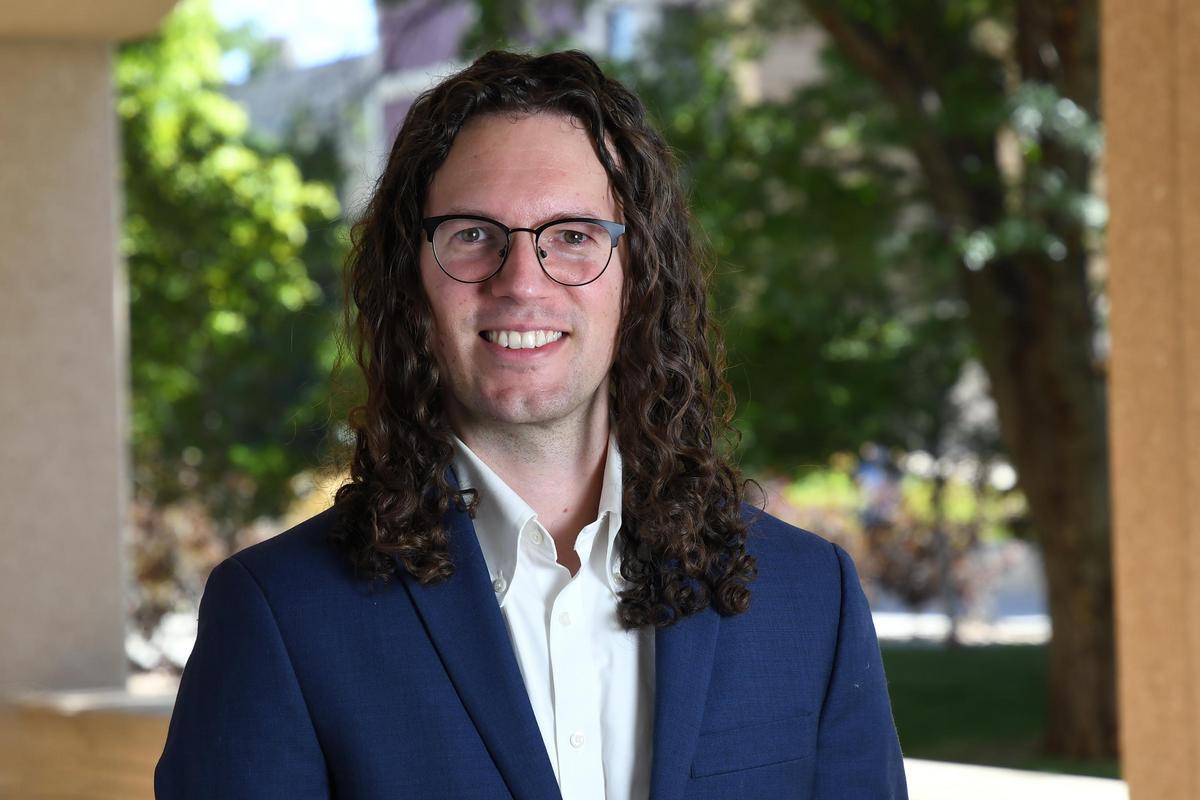
Led by Mohamed Shafik Khaled, assistant professor of minerals and subsurface energy with a focus on petroleum engineering, the Vertex Consortium integrates drilling and subsurface engineering, geoscience and scientific modeling to advance well technology across the full life cycle of the well, from exploration and drilling to well construction, integrity evaluation and repurposing.
Next-generation unconventional, deep hydrocarbon and geothermal wells are drilled in hotter, deeper and harder conditions than conventional analytical tools were designed for.
“In both unconventional and geothermal wells, drilling and well construction remain a major cost driver,” Khaled said. “As we drill deeper, longer and hotter wells, failures in drilling operations, cement integrity or well control are no longer edge cases. A single downhole tool failure, stuck-pipe event or compromised barrier can mean days of nonproductive time and set a project back by months.”
VERTEX is developing scientific machine learning (SciML) software, models and datasets that embed the physics of the wellbore directly into machine learning. Physics-informed neural networks and neural operators are trained on field data and validated against controlled experiments in Mines’ High Pressure, High Temperature laboratories and at the Edgar Experimental Mine. Initial focus areas include intelligent drilling and subsurface characterization, wellbore integrity and well repurposing, superhot and ultra-deep subsurface engineering, and geothermal techno-economic analysis
“Companies need a trusted place to test and de-risk these tools before using them in the field,” Khaled said. “VERTEX is being designed to be that place.”
Current VERTEX tools include:
- WellTherm: a physics-informed neural operator that computes the full downhole temperature field in milliseconds, roughly 200 times faster than a conventional simulator. It calibrates to each well from mud-in and mud-out temperatures, returns a P10-P90 uncertainty band, and works as a conversational drilling advisor that recommends circulation and shut-in schedules.
- GeoREV: Maps near-wellbore fractures and rock mechanical facies while drilling from routinely collected drilling data, without expensive logging runs or coring.
- Wellbore Integrity Risk Assessment Model: a hybrid framework that scores barrier reliability, integrity risk and remaining useful life to prioritize legacy wells for plug-and-abandonment or repurposing.
“VERTEX is a prime example of the multidisciplinary integration prevalent at Mines that helps to solve complex problems,” said Jennifer Miskimins, Rob & Ann McKee Leadership Chair for Minerals and Subsurface Energy. “We are pleased to have Dr. Khaled driving these initiatives forward that are so critical to helping solve the world’s increasing need for energy.”
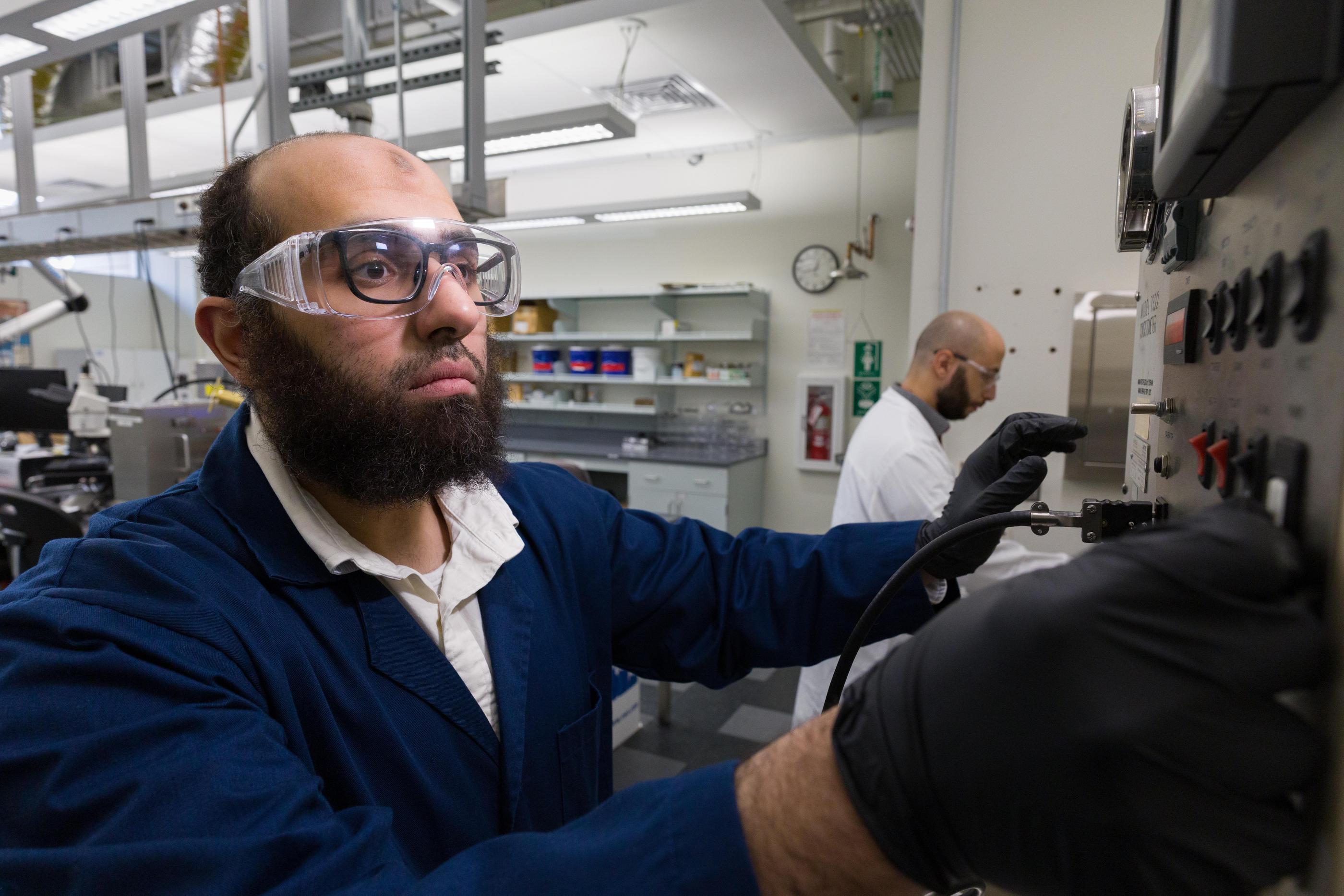
VERTEX researchers test each of their models against physical data in three validation environments. At the Edgar Mine, a historic underground silver and gold mine owned by the university, a compact, electric-hydraulic diamond core experimental rig can drill up to 800 meters. On campus, researchers can conduct full-scale drilling tests in holes up to 36 inches at the Earth Mechanics Institute. The consortium’s High Pressure, High Temperature drilling fluid, cement, and rock physics labs also have equipment for next-generation cement formulations for oil and gas, geothermal, and self-healing applications.
VERTEX recently inked a deal with Diamondback Energy to be the consortium’s founding member. Diamondback is an independent oil and natural gas exploration and production company headquartered in Midland, Texas.
VERTEX is currently recruiting additional member companies across the subsurface energy value chain: oil and gas operators; geothermal developers, including enhanced and superhot geothermal; drilling contractors and well service companies; cement, drilling fluid and specialty chemical suppliers; and well automation, sensor and software companies.
VERTEX members will help set the annual research agenda, nominate a target problem for year one and can add their own wells and datasets as test cases. They will receive a non-exclusive internal-use license to consortium software and models, pre-publication briefings, direct time with faculty and students, and first access to recruit graduates. Member data stays under NDA, Khaled said.
A former drilling solutions engineer, Khaled leads the consortium with Bill Eustes, associate professor emeritus in petroleum engineering; Jamal Rostami, Haddon/Alacer Gold Endowed Chair; and Xiaolei Guo, assistant professor in metallurgical and materials engineering. Eight graduate students and three undergraduate researchers working on drilling, geoscience and well integrity round out the team.
“What excites me is that we can take a model from the whiteboard to a real well site,” said Moaz Hiba, a PhD candidate working on downhole temperature modeling. “With our WellTherm program, we teach models the physics of the wellbore so they can predict well temperature in real time. Our agentic advisory work turns those predictions into decisions for well planning and operations.”
Companies interested in joining VERTEX can learn more at people.mines.edu/vertex to schedule a 60-minute session with their drilling and wells team.

About Mines
Colorado School of Mines is a public R1 research university focused on applied science and engineering, producing the talent, knowledge and innovations to serve industry and benefit society – all to create a more prosperous future.