Article content
Colorado School of Mines has been recognized by the state of Colorado for its work to ensure students graduate with the skills needed to succeed in a workforce shaped by artificial intelligence.
Mines was one of six institutions in the state to receive the new AI-Engaged Campus designation from the Colorado Department of Higher Education. The designation recognizes institutions that are intentionally preparing students, faculty and staff for an AI-driven future.
Mines Provost Stefanie Tompkins said the designation reflects not only the university’s progress on AI literacy but also the broader learning underway as students, faculty and staff navigate an increasingly AI-enabled world.
“What I appreciate about this recognition is that it reflects the kind of learning we are doing together as a campus,” Tompkins said. “AI is changing the tools available to our students, faculty and staff, but it is also sharpening the importance of human judgment, creativity, ethics and problem framing. At Mines, we want our graduates to understand both sides of that evolving human-machine partnership and to be prepared to lead thoughtfully in an AI-enabled world.”
The new state designation is built around six pillars that provide a shared framework for institutional AI readiness:
- AI literacy in the curriculum
- Faculty preparedness and development
- Institutional AI policy
- Workforce and community connections
- Equity and ethics integration, and
- Institutional AI adoption in operations
To earn the designation, institutions were required to demonstrate meaningful progress in at least four of the six pillars.
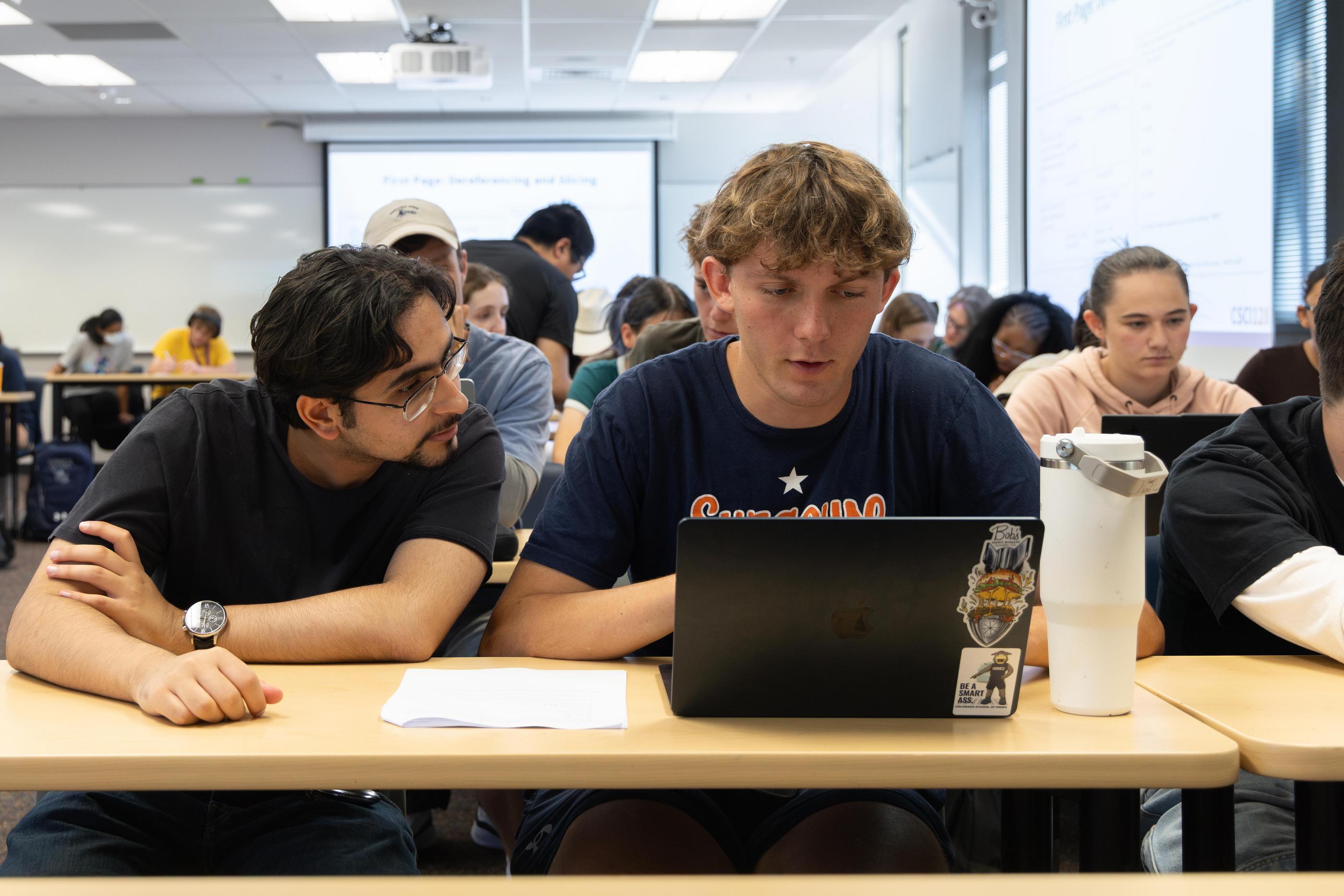
At Mines, AI literacy is being integrated into disciplines – rather than treated as a separate area of study – with each degree program considering what AI means for their respective field, curriculum and graduates. An institutional AI Literacy Framework intentionally pairs AI skills with eight human skills – critical analysis, systems thinking, metacognition, interpersonal communication, adaptability, creative thinking, ethical reasoning and problem framing – becoming even more important in an AI-enabled world.
On a policy level, Mines has developed clear student- and faculty-facing guidance around the responsible and appropriate use of AI in teaching and learning, as well as institutional AI governance and policy to support responsible use across Mines.
Informing the campuswide effort is the AI@Mines Leadership Team, AI@Mines Faculty Champions, a Faculty Advisory Board, a Student Advisory Team and industry partners. The AI@Mines Leadership Team is Vibhuti Dave, dean of undergraduate studies; Megan Sanders and Carter Moulton, director and faculty developer, respectively, at the Trefny Innovative Instruction Center; and Crystal Dobratz, Fryrear Chair for Innovation and Excellence and associate teaching professor of economics and business, whose Fryrear term is focused on artificial intelligence in teaching and learning.
"We've approached AI's emergence as an opportunity to reflect on what skills we teach in the classroom as well as how we can design learning environments that both inspire and validate learning for our students," Moulton said. “I'm particularly proud of the way our frameworks and guidance have consistently centered the importance of transparency, ethics, critical thinking and co-creation among the diverse voices and perspectives within our community."
/filters:format(webp)/prod01/mines/media/minesedu/admin-media/placeholder-images/Guggenheim.png)
About Mines
Colorado School of Mines is a public R1 research university focused on applied science and engineering, producing the talent, knowledge and innovations to serve industry and benefit society – all to create a more prosperous future.