Article content
A wound-care technology developed in a Colorado School of Mines laboratory is now being used to treat patients, marking a major milestone as the Mines faculty-founded startup moves from scientific research into clinical use.
GelSana Therapeutics, founded by Melissa Krebs, associate professor of chemical and biological engineering, has completed U.S. Food and Drug Administration registration for its first commercial product, CleraFlex™, which means the stretchable wound dressing can now be prescribed by physicians to patients.
The company’s initial focus is on hard-to-heal wounds, including diabetic foot ulcers, which represent a particularly significant challenge for patients and health care providers. CleraFlex is also indicated for use on leg ulcers, pressure sores, malignant or fungating wounds, surgical wounds and incisions, and second-degree burns.
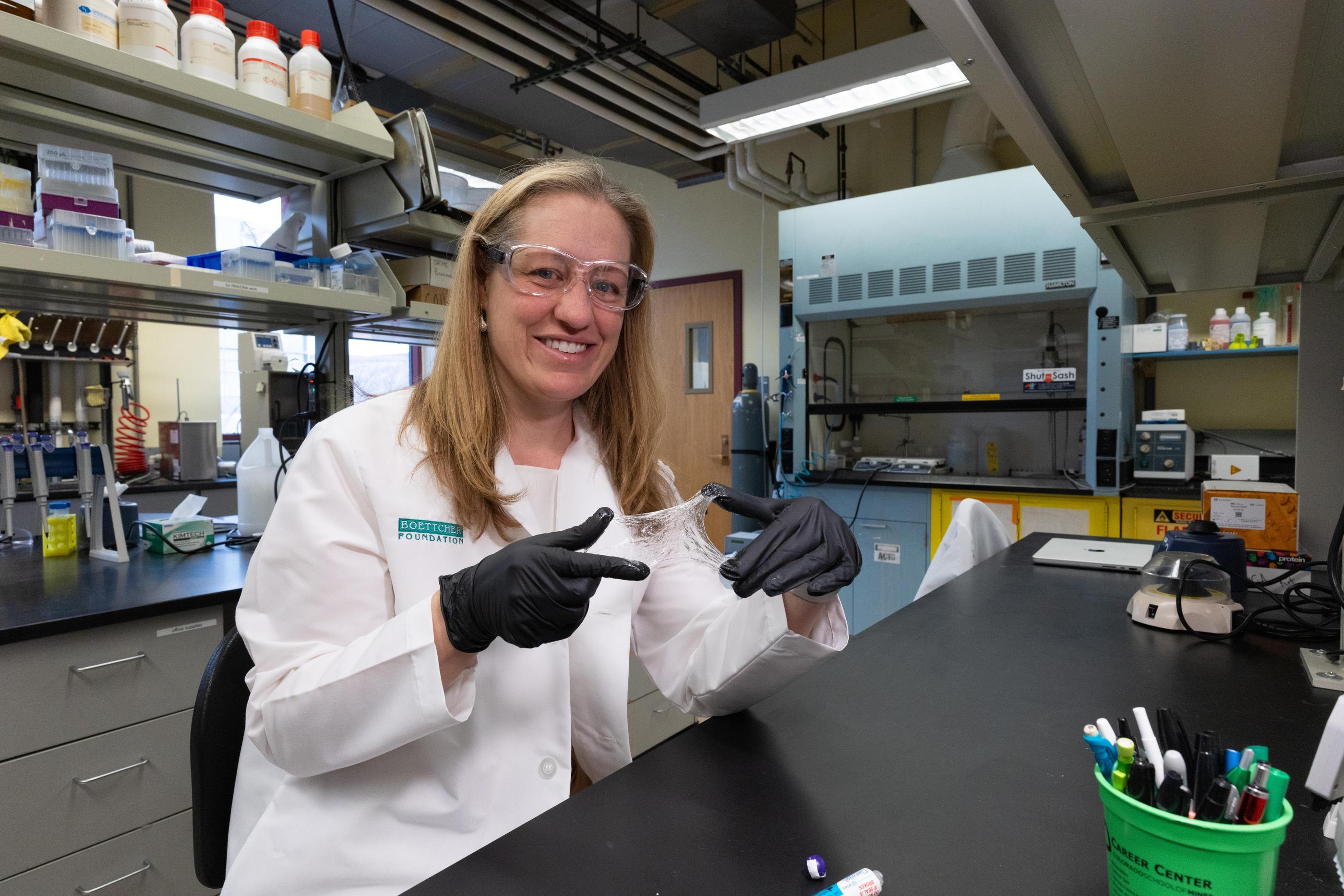
For Krebs, the clinical launch of CleraFlex represents a major milestone in a journey that began years ago in her Mines laboratory, where she and her research team developed the polymer technology underlying CleraFlex.
“This is an exciting point in the journey because the technology is no longer just something we are studying in the lab,” said Krebs, CEO of GelSana. “Physicians are using it with patients, and we are now in a position to learn from those clinical experiences and continue building the evidence around the product.”
One physician using CleraFlex is John James, M.D., a Colorado surgeon who is conducting a clinical study examining the product’s use in chronic wounds, including venous ulcers and diabetic foot ulcers.
"Chronic wounds are a huge problem and unfortunately very common -- we see 20-30 patients a day in our wound clinic alone,” James said. “These wounds don’t heal, become infected, and lead to substantial complications. GelSana’s product CleraFlex is unique in that it addresses multiple issues in wound healing all in a single product -- reducing inflammation, preventing infection and speeding healing.”
GelSana is taking a controlled approach to commercialization, Krebs said, with an initial emphasis on wound care clinics and hospital formularies. The company has also established a distribution partnership that will expand access to clinicians in multiple states. Because CleraFlex is intended for use under the direction or supervision of a health care professional, patients cannot purchase the product directly from GelSana. Interested patients in CleraFlex are encouraged to talk to their physicians about CleraFlex, Krebs said.
“We are hearing from patients who want access to the product, and we have to connect with their physicians,” Krebs said. “That is a good problem to have, but it also shows us how important it is to build relationships with clinicians who are treating these wounds every day.”
Building evidence in the clinic
GelSana is currently working with physicians who are interested in documenting their clinical experience with the product and generating data that can help inform future studies.
To date, the company has reported promising results from laboratory and animal studies with preclinical results showing reduced inflammatory markers and improved healing in diabetic wounds, as well as reduced bacterial burden in an infected burn-wound model. Unlike drugs, Class I medical devices like CleraFlex do not require clinical trials before physicians can prescribe them.
The company’s technology is based on zwitterionic polymers—materials engineered with both positively and negatively charged groups. The material is designed to reduce inflammation at the wound site, create a protective barrier, manage moisture and resist bacterial attachment while supporting the body's natural healing process.
GelSana’s immediate priority is to work with clinicians and health systems to understand where CleraFlex can provide the greatest benefit, Krebs said.
Diabetic wound care is a particular focus. People with diabetes can develop chronic foot ulcers because the disease can damage nerves and blood vessels, reducing sensation and circulation and impairing the body's ability to heal wounds. Other wounds of potential impact include venous stasis ulcers, pressure ulcers, burns, post-surgical incisions, and other inflammatory wounds.
“The need is enormous,” Krebs said. “We want to make sure we are doing this the right way, that we are getting the product into the hands of physicians who need it, listening to what they see clinically and building the evidence.”
From Mines research to a commercial product
GelSana was founded in 2020 after research in Krebs’ laboratory demonstrated the potential of the company's polymer technology for wound healing. Mines Venture Fund I made its inaugural investment in GelSana in 2024, supporting the company's efforts to bring its first product through regulatory development and toward the clinical market.
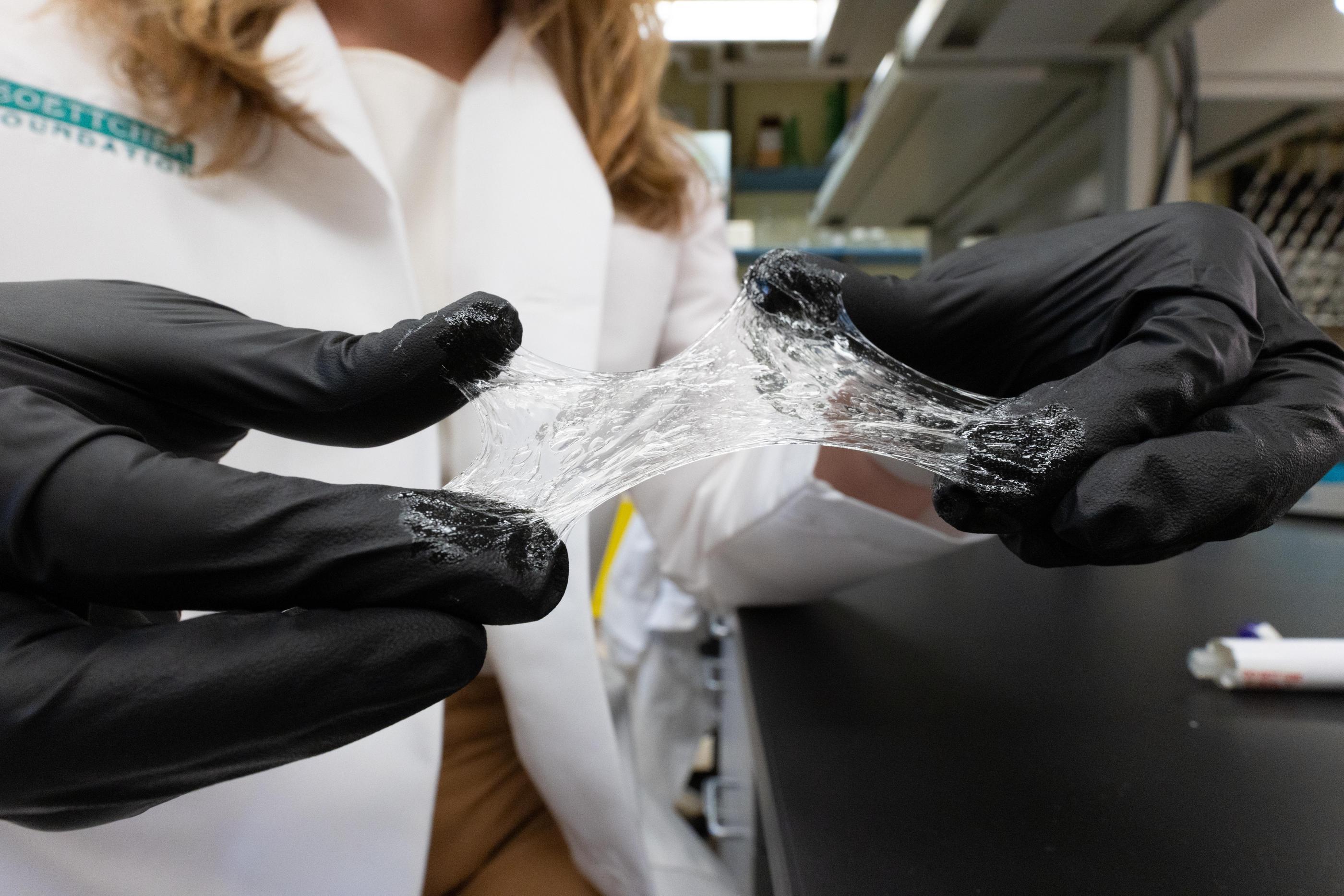 CleraFlex is based on polymer technology developed in Melissa Krebs' Mines lab.
“Being able to take something that started as a research question at Mines and eventually see it being used by patients is incredibly rewarding,” Krebs said.
CleraFlex is based on polymer technology developed in Melissa Krebs' Mines lab.
“Being able to take something that started as a research question at Mines and eventually see it being used by patients is incredibly rewarding,” Krebs said.
The company, headquartered in Aurora, Colorado, is preparing to launch a Series A fundraising effort to support commercialization and continued product development.
The company is also exploring potential applications for CleraFlex with the U.S. Department of War. Its shelf stability and ability to be used in different environments along with the ability to minimize the risk of infection could make the technology useful in settings where medical resources and conventional wound-care supplies are limited.
As GelSana expands access to CleraFlex, Krebs said the company's next phase will be defined not only by sales but also by the clinical experience being generated by physicians and patients using the product.
“We've spent years developing the science,” Krebs said. “Now we're at the point where we can learn from what happens when that science is put into practice.”
/filters:format(webp)/prod01/mines/media/minesedu/admin-media/placeholder-images/Guggenheim.png)
About Mines
Colorado School of Mines is a public R1 research university focused on applied science and engineering, producing the talent, knowledge and innovations to serve industry and benefit society – all to create a more prosperous future.