Article content
Three research teams at Colorado School of Mines have been awarded seed grants from the Colorado Office of Economic Development and International Trade (OEDIT) to help move quantum technologies from lab to market.
The $50,000 seed grants, administered by the CUbit Quantum Initiative at CU Boulder in partnership with OEDIT and funded by the Colorado Economic Development Commission, support the translation of scientific discoveries into commercially viable technologies. Over the last three years, the state-funded program has supported a total of 24 projects with $1.2 million in funding.
The fourth and final round of awards, announced earlier this month, emphasized superconducting technologies and their potential to advance next-generation quantum systems and applications.
The Mines awardees are:
- Dharmraj Kotekar-Patil, assistant professor of physics, and Minghan Li, assistant professor of computer science
- Hung-Yu Yang, assistant professor of electrical engineering, and Wouter Van De Pontseele, assistant professor of physics
- Zihuai Zhang, assistant professor of physics, and Meenakshi Singh, associate professor of physics
Dharmraj Kotekar-Patil: Accelerating quantum materials discovery
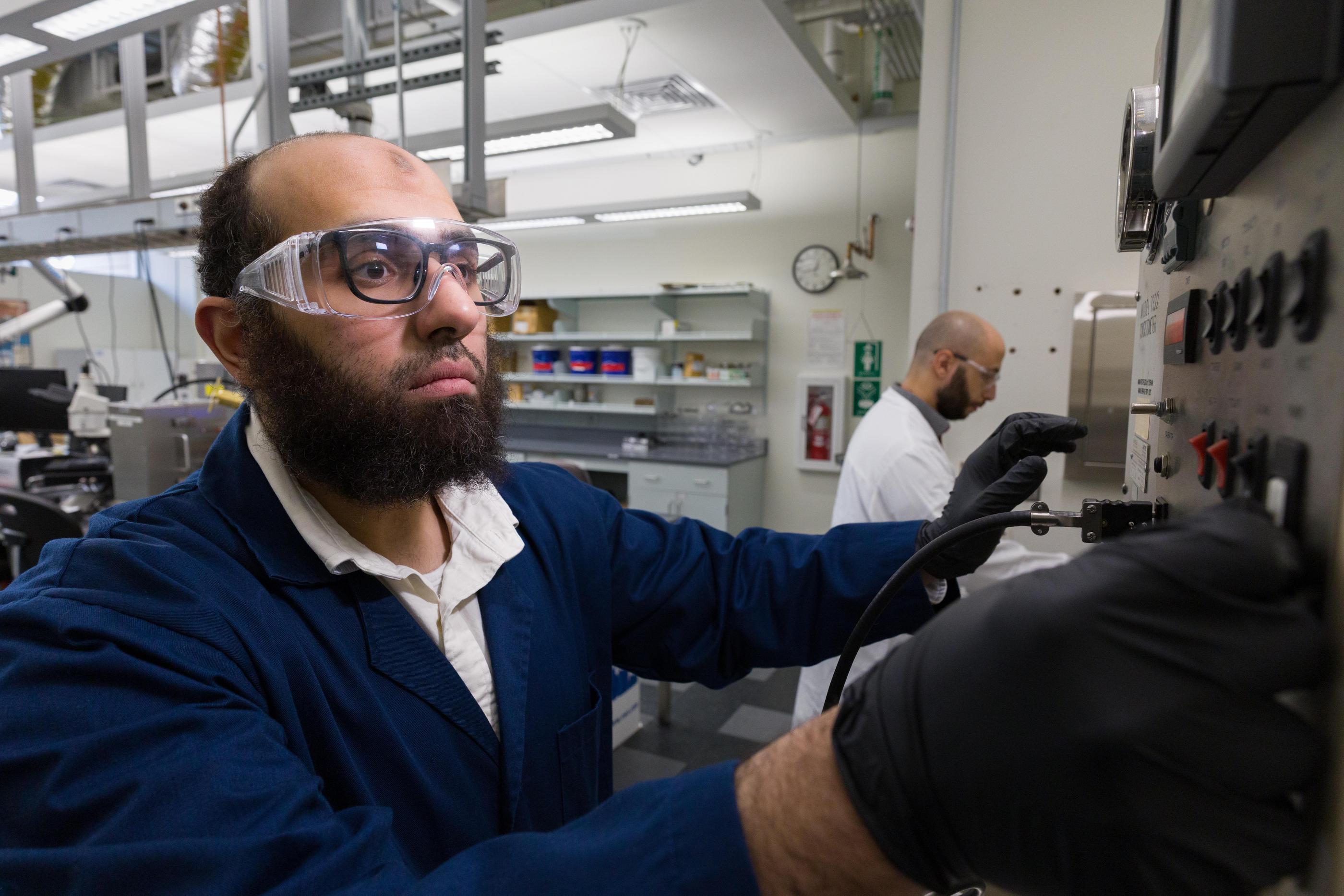
 Dharmraj Kotekar-Patil, assistant professor of physics, is working with Minghan Li, assistant professor of computer science, to address one of the most time-consuming steps in quantum materials research: identifying extremely thin materials, sometimes just a single atomic layer thick.
Currently, researchers spend countless hours manually examining samples under microscopes, a process that is labor intensive, prone to human error and highly dependent on individual expertise.
Their project, AutoFlake, will combine automated sample handling, advanced microscopy and machine vision powered by few-shot machine learning, enabling the system to learn to recognize new materials from just a few examples rather than requiring large training datasets.
“By screening multiple samples automatically and consistently identifying promising materials, AutoFlake aims to significantly improve research efficiency, accelerate quantum material and device development, and lay the groundwork for scalable manufacturing of future quantum technologies," Kotekar-Patil said. “This will free students and researchers from repetitive, labor-intensive tasks, allowing them to focus on what matters most: exploring new materials, discovering fascinating physics and advancing scientific knowledge.”
Hung-Yu Yang: Next-generation quantum amplifiers
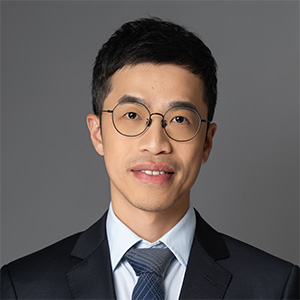 Quantum computers and sensors rely on boosting extremely weak signals without adding background noise, a task where conventional superconducting amplifiers fail the moment a strong magnet is introduced. Yet high magnetic field environments are essential for certain quantum applications.
To bridge this gap, Hung-Yu Yang, assistant professor of electrical engineering, and Wouter Van De Pontseele, assistant professor of physics, are developing a new generation of quantum amplifiers. By layering two-dimensional superconducting materials just a few atoms thick, the team is engineering a microscopic device that naturally withstands magnetic disruption.
“Successfully demonstrating this technology will unlock major breakthroughs for systems operating in extreme magnetic environments, from advanced quantum computing to quantum experiments searching for axion dark matter," Yang said.
Beyond solving a critical bottleneck in high-field sensing, the project underscores the broader potential of 2D materials across every aspect of functional superconducting circuits, pointing toward dramatically smaller, quieter, and more efficient quantum hardware. While the team’s hands-on, tabletop assembly method is built for rapid lab prototyping rather than mass production, establishing this proof of concept will provide the essential blueprint to scale these devices commercially — either through automated 2D fabrication platforms or the development of specialized thin-film deposition processes.
Zihuai Zhang: Bringing strain control to quantum technologies
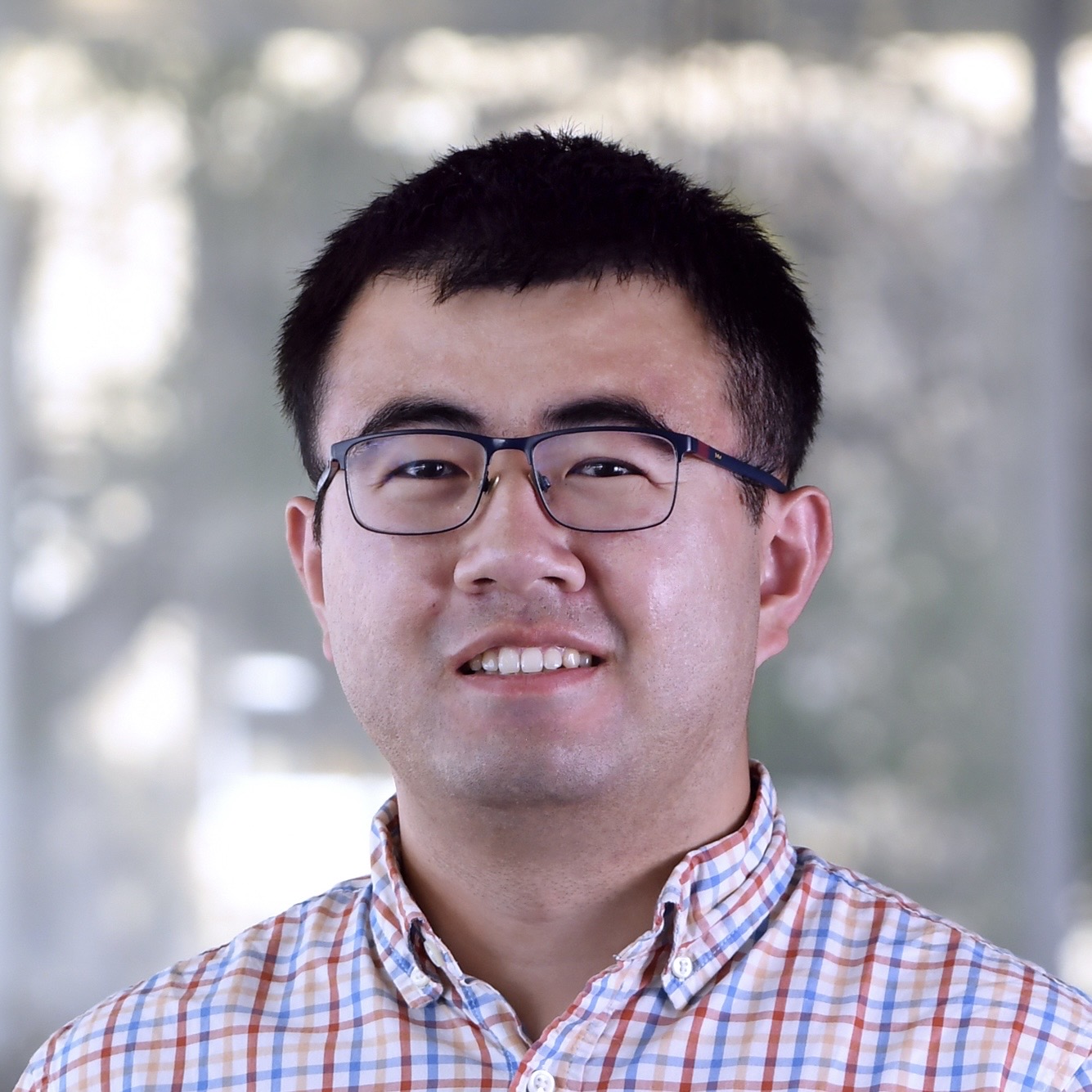 Mechanical strain provides a powerful way to control quantum materials and devices, but integrating strain control into sensitive quantum experiments remains a challenge.
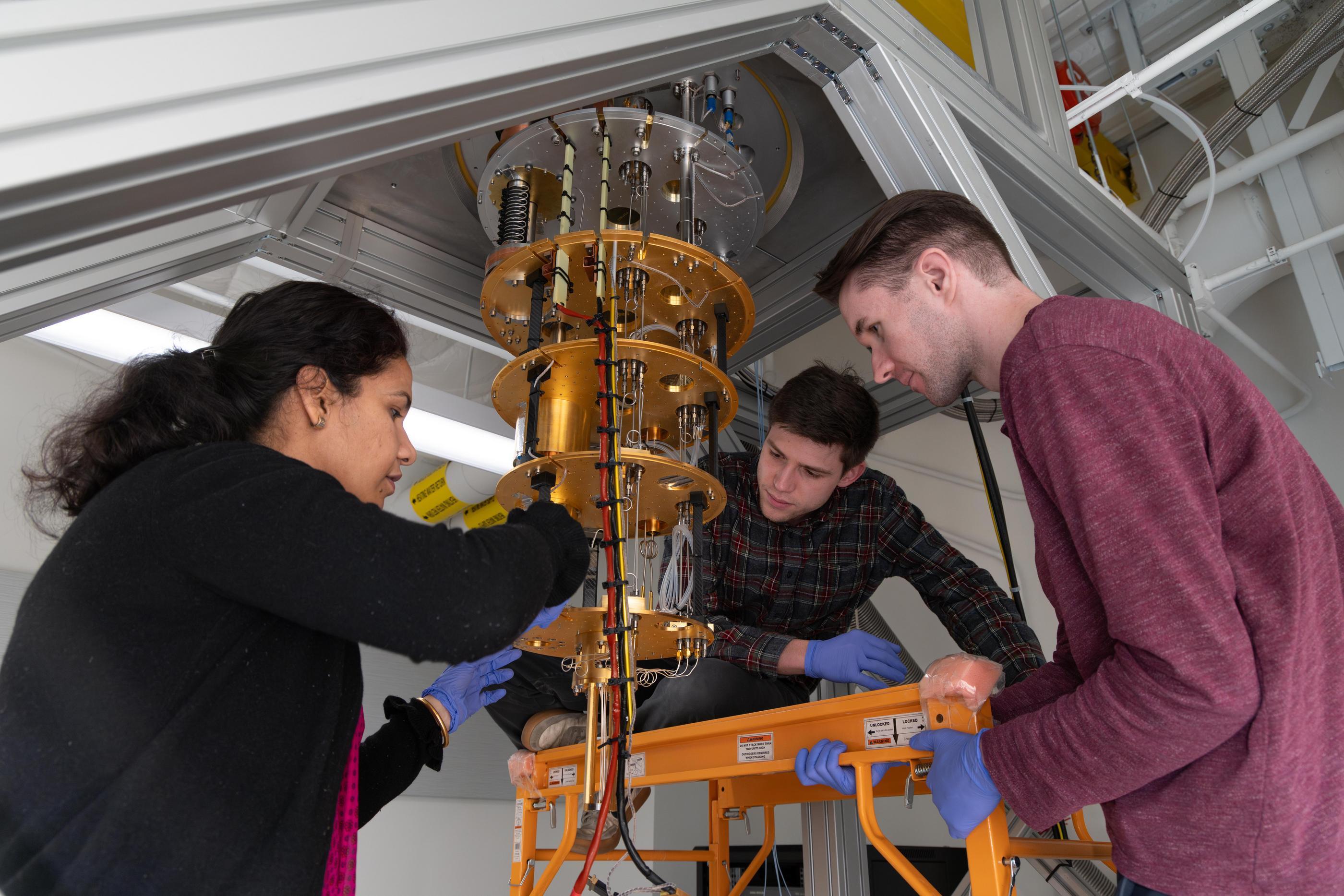
Zihuai Zhang, assistant professor of physics, is working with Meenakshi Singh, associate professor of physics, to advance a modular strain control instrument for quantum devices. The project builds on a strain platform previously developed and tested at cryogenic temperatures by Singh’s group. Zhang and Singh will adapt this technology for sensitive microwave measurements of superconducting quantum devices. They will use high-quality-factor microwave resonators, which store energy with very little loss, to benchmark and refine the instrument.
The platform will enable the team to explore mechanical strain as a new tuning knob for improving superconducting qubit performance. Beyond superconducting circuits, the platform’s modular design will support both electrical and optical studies of a wide range of quantum devices.
“Our goal is to make precision strain control a widely accessible tool for quantum research and technology development," Zhang said. “We envision this platform enabling both fundamental discoveries in quantum materials and the development of next-generation quantum devices.”

About Mines
Colorado School of Mines is a public R1 research university focused on applied science and engineering, producing the talent, knowledge and innovations to serve industry and benefit society – all to create a more prosperous future.