Erich Kirshner
Media Relations Specialist
303-273-3188
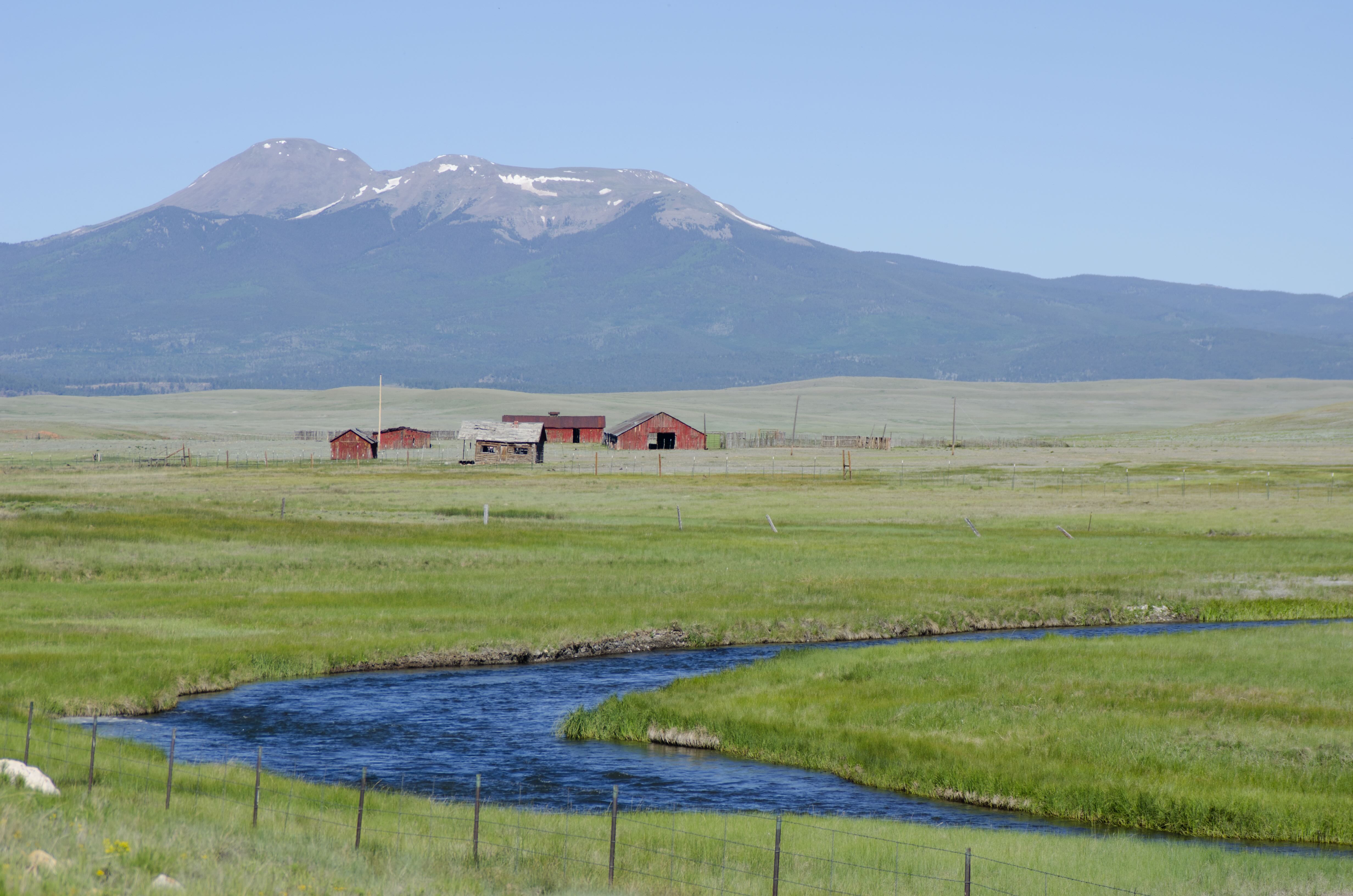
Colorado and much of the Intermountain West are facing widespread drought, underscoring the region’s long-standing vulnerability to water shortages. While drought is often associated with a lack of rainfall, the story is more complicated in the West: snowpack, soil moisture, streamflow, groundwater, temperature and evaporation all influence how much water is ultimately available to communities, agriculture, ecosystems and industry.
The 2026 water year has highlighted the importance of mountain snow. A severe snow drought across the Western U.S. was made approximately four times more likely by human-caused climate change, according to a Colorado School of Mines-led study published in the Proceedings of the National Academy of Sciences. In the Upper Colorado River Basin, the snow drought was approximately 14 times more likely because of climate change.
Snowpack functions as a natural reservoir, storing water during the winter and releasing it as temperatures rise. When less precipitation falls as snow—or snow melts earlier—less water may be available during the summer months when demand is often highest. The consequences can extend from rivers and reservoirs to farms, forests, ecosystems, hydropower and communities across the West.
Drought also raises questions about how societies manage increasingly limited water supplies. Groundwater can provide an important buffer during dry periods, but aquifers can take years or decades to recharge.
Colorado School of Mines researchers are approaching drought from many angles, including climate science, snow hydrology, watershed processes, groundwater, water economics, water policy and water-treatment technologies.
Our Experts
/filters:format(webp)/0x0:300x300/prod01/mines/media/minesedu/faculty-headshots/adrienne-marshall.jpg )
Adrienne Marshall, assistant professor of earth, space and planets
Marshall is an assistant professor of geology and geological engineering and a computational hydrologist whose research focuses on snow hydrology, ecohydrology, climate change and water resources. She led a 2026 study finding that human-caused climate change made this year’s Western snow drought approximately four times more likely. Her research examines how changes in snowpack affect water availability and how communities can prepare for increasingly variable water supplies. She recently received a National Science Foundation CAREER Award to study long-term changes in Western snowpack.
Marshall can discuss: snow drought; Western snowpack; climate change and water resources; snowmelt and runoff; Colorado River water supplies; hydropower; drought and climate variability; and preparing for future water-supply extremes.
/filters:format(webp)/0x0:600x600/prod01/mines/media/minesedu/faculty-headshots/steven-smith-upscale.jpg )
Steven Smith, associate professor and associate department head of economics and business
Smith is an associate professor and associate department head of economics and business. His research examines the economics of water resources, including how climate-driven changes in streamflow affect water allocation and water rights. His recent research with Marshall, published in Nature Water, found that climate change is changing not only how much water flows through rivers but also when that water is available—an important consideration in a system where water rights and demand vary throughout the year.
Smith can discuss: water economics; water rights; water allocation; drought and water markets; climate change and water policy; competing demands for scarce water; and the economic implications of changing streamflow.
/filters:format(webp)/0x0:1024x1024/prod01/mines/media/minesedu/faculty-headshots/lucas-bessire.jpg )
Lucas Bessire, professor of anthropology
Bessire is a professor of anthropology whose work examines groundwater, water governance, irrigation agriculture and the social consequences of water scarcity. His book Running Out: In Search of Water on the High Plains explores groundwater depletion and the people and communities confronting declining water supplies.
Bessire can discuss: groundwater depletion; drought and agriculture; water scarcity; the Ogallala Aquifer and High Plains; water policy and governance; and the human dimensions of long-term drought.
/filters:format(webp)/0x0:300x300/prod01/mines/media/minesedu/faculty-headshots/tzahi-y-cath.jpg )
Tzahi Cath, professor of civil and environmental engineering
Cath is a professor of civil and environmental engineering whose research focuses on water and wastewater treatment, desalination, membrane technologies and water reuse. His work includes technologies that can treat impaired water and produce high-quality water for reuse, offering potential tools for communities and industries facing growing water scarcity.
Cath can discuss: water reuse; wastewater treatment; desalination; direct potable reuse; technologies for expanding water supplies; water scarcity; and the energy-water nexus.
/filters:format(webp)/0x0:300x300/prod01/mines/media/minesedu/faculty-headshots/nathan-lenssen.jpg )
Nathan Lenssen, teaching assistant professor of applied mathematics and statistics
Lenssen is a teaching assistant professor of applied mathematics and statistics at Mines and a scientist at the National Center for Atmospheric Research. His research focuses on climate variability, predictability and change, including the development and interpretation of climate datasets and models.
Lenssen can discuss: climate variability; drought prediction; climate change and drought risk; interpreting climate data; climate trends and uncertainty; and distinguishing natural climate variability from human-caused climate change
/filters:format(webp)/0x0:300x300/prod01/mines/media/minesedu/faculty-headshots/kamini-singha.jpg )
Kamini Singha, University Distinquished Professor in geology and geological engineering
Singha is a University Distinguished Professor in geology and geological engineering and geophysics. A hydrogeologist, her research focuses on groundwater flow, groundwater-surface-water interactions and the movement of water and contaminants through porous media and fractured rock. Her work also examines moisture dynamics and infiltration in arid and semi-arid environments.
Singha can discuss: groundwater; aquifers; groundwater-surface-water interactions; drought and groundwater resources; soil moisture; infiltration; water quality; and how drought and wildfire affect subsurface water systems.
/filters:format(webp)/prod01/mines/media/minesedu/admin-media/placeholder-images/Guggenheim.png)